
Stress and Diabetes: How to Break the High Blood Sugar Cycle
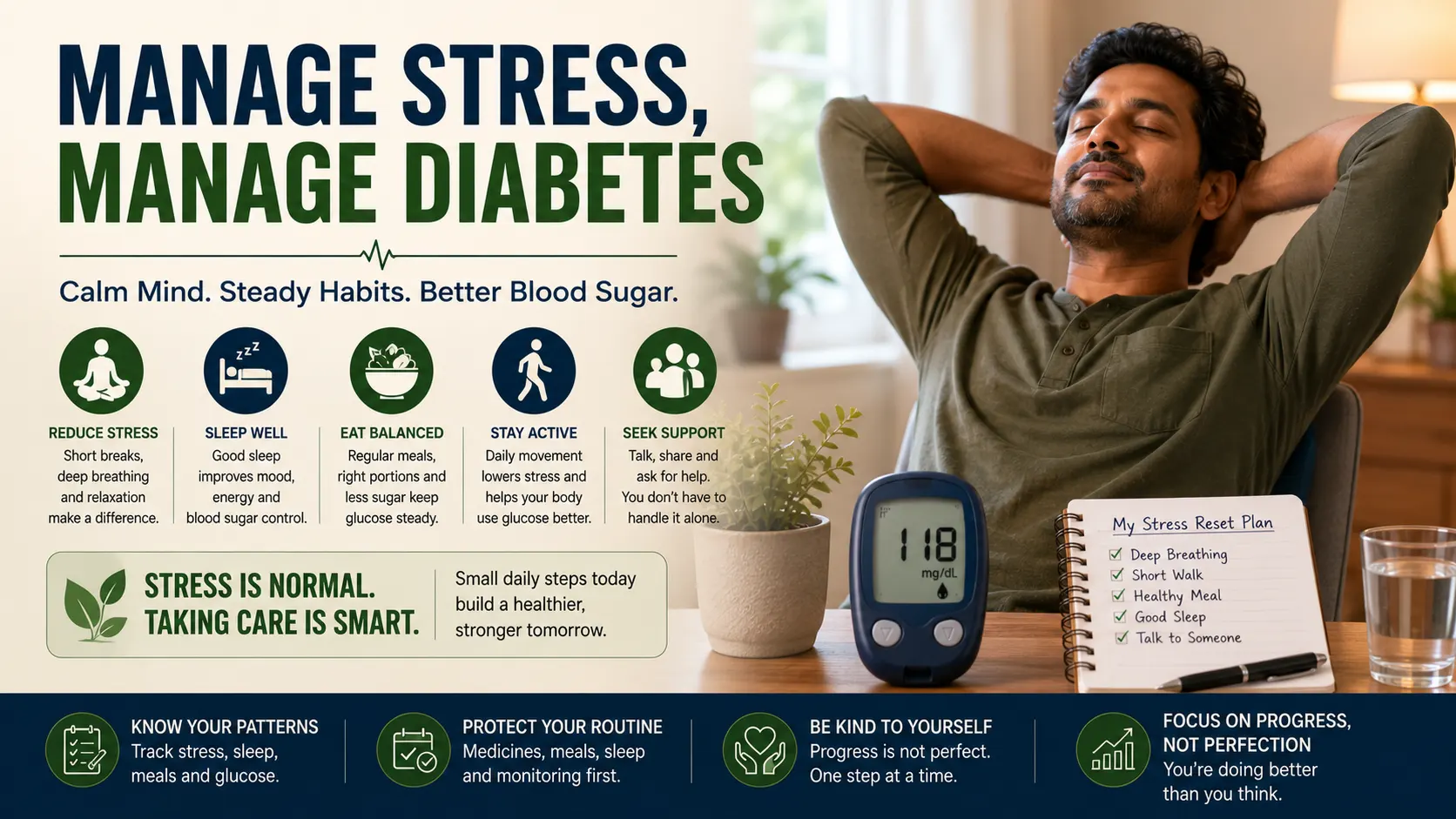

Stress is a normal human response to challenge, but repeated or overwhelming stress can make diabetes harder to manage. Stress hormones prepare the body for action and can increase glucose availability. At the same time, worry and exhaustion can disrupt sleep, meals, activity, monitoring and medicine routines. High readings then create more worry, forming a cycle. Breaking that cycle does not require removing every problem from life. It begins with recognising patterns and building small recovery practices into diabetes care.
When the brain senses threat, hormones such as adrenaline and cortisol help mobilise energy. The liver may release more glucose so muscles can respond quickly. This is useful during a short emergency. When psychological or physical stress is repeated, glucose may remain more difficult to control, particularly in people with insulin resistance or reduced insulin production.
Illness, pain, infection and lack of sleep are also forms of physical stress. They can raise glucose even when food has not changed. Emotional stress may affect different people differently; some see glucose rise, while others eat less or experience low readings because their routine changes. Monitoring the personal pattern is more useful than assuming one universal response.
Daily decisions about food, medicine, testing and appointments can create diabetes distress. This is not the same as ordinary stress or a failure to cope. A person may feel tired of numbers, guilty about results or afraid of complications. Family comments and conflicting advice can increase the burden. When distress is ignored, people may avoid monitoring or appointments because every result feels like judgement.
Clinical conversations should make room for these feelings. A plan with too many demands may need simplification. Education can correct fears, while practical support can address cost, scheduling or family conflict. Anxiety or depression may require specific professional care. Mental health is part of diabetes health.
Stress may first appear as irritability, racing thoughts, muscle tension, headache, poor concentration or disturbed sleep. Behavioural signs include skipped medicines, repeated snacking, more caffeine, reduced movement or avoiding glucose checks. Recognising an early sign gives you a chance to respond before the pattern becomes a difficult week.
Keep a brief record of stressful events, sleep, meals and glucose for several days. The aim is not to document every emotion. Look for repeated connections. Does glucose rise during deadlines? Does family conflict lead to late eating? Does poor sleep make the next day less active? One clear pattern suggests one practical intervention.
A recovery practice does not need to take an hour. Slow breathing for two minutes, stepping outside, stretching, prayer or a short walk can interrupt automatic behaviour. Extend the exhale, relax the shoulders and notice the next useful action. This may be drinking water, taking scheduled medicine, preparing a balanced snack or asking for help.
The reset is not intended to make a serious problem disappear. It creates a pause between stress and response. Practised when stress is mild, it becomes easier to use during difficult moments. Choose one method rather than collecting many techniques.
When life becomes busy, aim to protect a minimum routine: medicines as directed, regular enough meals, hydration, essential monitoring and a consistent sleep opportunity. Simplify food instead of abandoning structure. Keep suitable basic ingredients available. A balanced simple meal is better than delaying food until extreme hunger leads to overeating.
Movement can also be simplified. If the usual exercise session is impossible, use several short walks or mobility breaks. Maintaining the identity of an active person helps the full routine return later. Avoid using strenuous exercise as punishment for a high reading or stressful meal.
A glucose reading is information, not a character grade. Ask what may have influenced it and whether the result is isolated or repeated. Check timing, meal, sleep, illness, activity and medicine. Follow the action plan provided by the clinical team. Panic can lead to unsafe extra medicine or extreme restriction.
Set boundaries around monitoring if checking has become compulsive, while still following clinical needs. Agree on meaningful times and what action each range requires. Clear instructions reduce uncertainty and make the meter a tool rather than a source of constant alarm.
General requests such as please support me can be difficult to translate into action. Ask for something specific: a walk after dinner, fewer sweets kept in sight, quiet time for sleep, help attending an appointment or no comments about a single reading. Explain that blame increases stress and does not improve glucose.
Family members also experience worry. A shared consultation can help everyone hear the same information and understand warning signs. Support should respect the patient’s independence. The goal is cooperation, not surveillance.
Seek support when worry, sadness, panic, anger or sleep difficulty persists and interferes with daily function. Thoughts of self-harm require urgent help. Counselling, mental health care and appropriate medical treatment can work alongside diabetes care. Asking for help early is a strength.
Physical symptoms such as chest pain, severe breathlessness, confusion or weakness should not automatically be labelled stress. Urgent symptoms need medical evaluation. Similarly, very high glucose with vomiting, dehydration or altered awareness requires prompt care.
Diabetes can require dozens of small decisions each day. Repeating a few dependable breakfasts, setting medicine reminders and keeping monitoring supplies in one place can reduce mental load. Prepare a basic plan for workdays, travel and illness before stress is high. Routines preserve attention for decisions that genuinely need thought.
Ask the clinical team for written instructions when possible. Know whom to contact, which symptoms are urgent and what information to record. Uncertainty creates stress, while a clear next step restores a sense of control.
Glucose remains important, but also notice whether sleep, energy, activity, meal consistency and confidence are improving. A stressful week may temporarily raise readings without erasing months of progress. Review the overall trend and return to the basic routine. Sustainable care allows recovery after disruption and makes the next healthy action easier to choose.
Major life events, infection, steroid treatment or prolonged sleep disruption can change glucose requirements. Bring records to the clinical team and explain what has changed. The solution may involve routine support, temporary monitoring changes or treatment adjustment. Do not alter insulin or prescribed medicine independently.
Glycemia’s personalised approach looks at glucose in the context of meals, activity, sleep, stress and pancreatic health. This helps separate a temporary stress pattern from a longer treatment issue. Explore the Glycemia diabetes treatment programme and learn more about the clinic’s care philosophy.
Choose one recovery practice, one routine to protect and one person to ask for support. Review the result after two weeks and use the guide to sleep and blood sugar to strengthen recovery. If stress and glucose continue to reinforce each other, arrange a consultation through the Glycemia contact page. Progress becomes possible when the plan supports the person carrying it.