

After-Meal Blood Sugar Spikes: Building a Better Kerala Plate
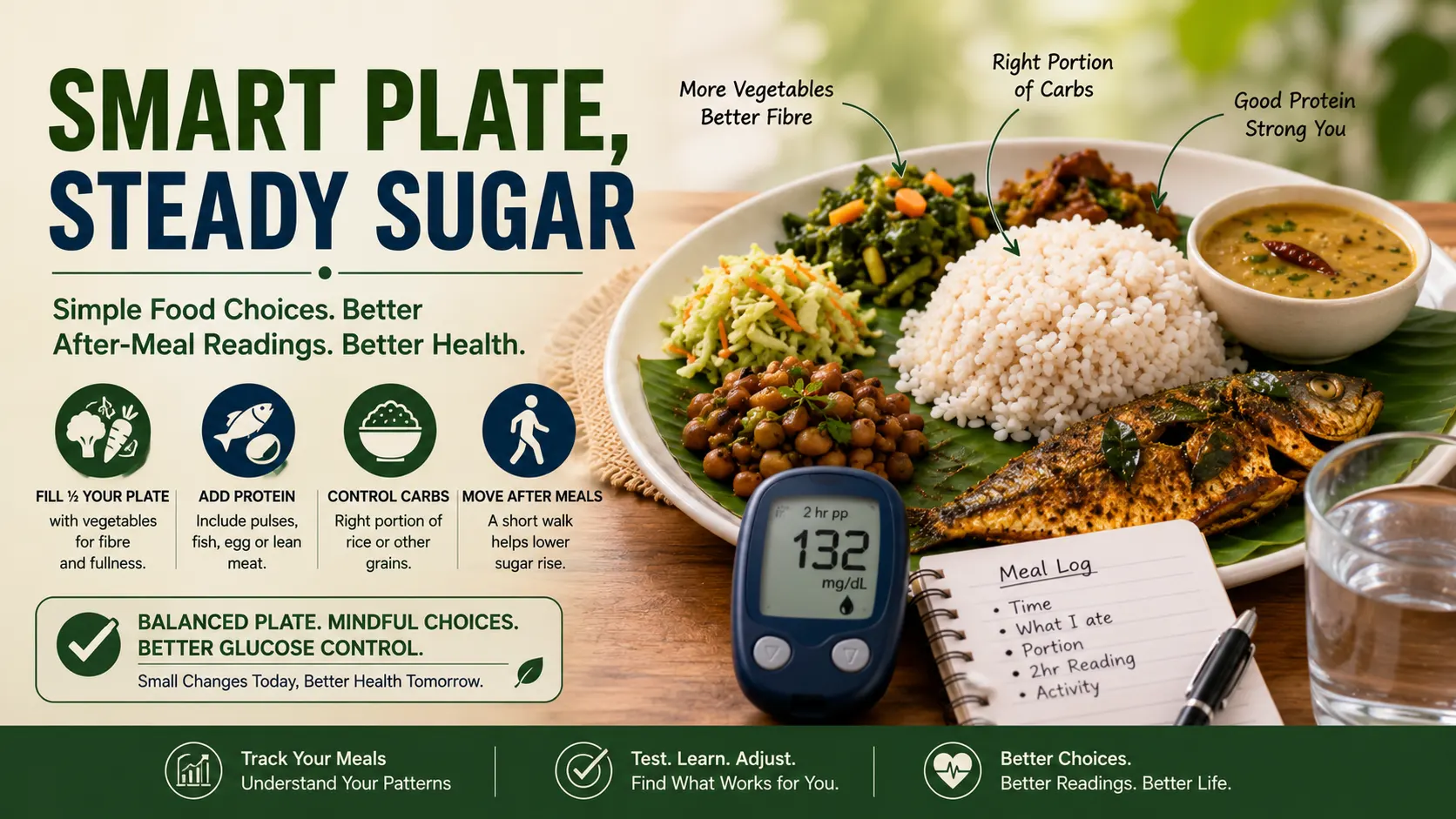

A fasting glucose result can look reasonable while blood sugar rises sharply after meals. These after-meal spikes matter because they contribute to overall glucose exposure and may explain an HbA1c that remains above target. The solution is not to fear every Kerala food or stop eating carbohydrates completely. A better approach is to understand portion, preparation, meal balance, timing and personal response. Small changes to the whole plate can produce a different glucose pattern.
Carbohydrates are digested into glucose. The speed and size of the rise depend on the amount eaten, food structure, processing, fibre, the rest of the meal, insulin response and activity. A large portion of polished rice eaten quickly may behave differently from a smaller portion accompanied by vegetables, pulses and protein. The same person can also respond differently after poor sleep, illness or inactivity.
Insulin resistance means cells do not respond efficiently to insulin, while reduced beta cell function can limit the amount or timing of insulin released. Both can produce high after-meal readings. Medicines and insulin timing also matter. This is why food advice should be connected to the individual treatment plan.
A glucose reading only has meaning when the timing is known. Follow the monitoring time recommended by your clinical team, commonly measured from the beginning of the meal. Comparing a one-hour reading on one day with a three-hour reading on another can create confusion. Record the meal, portion, time, activity and medicine when investigating a pattern.
One high result may follow an unusual meal or stressful day. Repeated similar results are more useful. Do not test continuously without a question, and do not change medicine based on a single number. People at risk of low glucose need an individual monitoring plan.
A practical plate can devote a generous area to non-starchy vegetables, an appropriate portion to protein and a controlled portion to carbohydrate. The exact balance depends on energy needs, kidney health, medicines and body goals. Vegetables add volume and fibre, while protein supports fullness and muscle. This structure helps reduce the chance that starch occupies nearly the entire meal.
There is no universal rice measure for every patient. Use your current portion as a starting point and adjust with clinical or nutrition guidance. Replacing part of the rice with vegetables and protein is often easier than removing it completely. Eat slowly enough to notice fullness before taking a second serving.
Puttu, appam, dosa and idiyappam are familiar breakfasts, but portions and accompaniments determine the overall effect. Several pieces with a sweetened drink can create a larger carbohydrate load. Pair a controlled portion with egg, pulses, fish, vegetable curry or another suitable protein and fibre source. Coconut-based dishes add flavour and energy, so total quantity still matters.
Skipping breakfast is not automatically better. For some people it leads to late hunger and a very large lunch; for others a structured eating window may be clinically appropriate. Medicine timing and low-glucose risk must be considered. Choose the pattern that produces steadier readings and can be sustained.
Sweet tea, soft drinks, packaged juices and sweetened coffee can raise glucose quickly because liquid sugar is absorbed easily and provides little fullness. Even fruit juice lacks the structure of whole fruit and is easy to consume in a large amount. Unsweetened drinks and water are better routine choices for most people.
Labels can hide sugar under several names, and products marketed as healthy may still contain substantial carbohydrate. Biscuits, sweetened cereals and flavoured drinks can become frequent extras that are forgotten when reviewing meals. Track snacks and drinks as carefully as the main plate.
Fruit provides nutrients and can fit a diabetes meal plan. A large fruit portion, several fruits together or fruit combined with a heavy meal may raise glucose more than expected. Whole fruit is generally preferable to juice because chewing and fibre slow consumption. Individual response and kidney considerations can influence selection.
Do not replace every sweet with unlimited dried fruit. Drying concentrates carbohydrate into a small volume. Test assumptions with an agreed glucose plan rather than relying on labels such as natural or sugar-free.
Muscles can use glucose during activity. A comfortable walk after a meal may reduce the size or duration of the rise for some people. Even household movement can be better than sitting continuously. The length and intensity should fit fitness, weather and medical status.
People with foot ulcers, severe neuropathy, chest symptoms or very high or low glucose need guidance. Anyone using insulin should understand how activity affects low-glucose risk. Movement is a treatment support, not a reason to ignore symptoms.
Special meals do not have to become a cycle of restriction and guilt. Avoid arriving extremely hungry, choose the foods that matter most, keep portions visible and limit repeated servings. Sweet drinks, desserts and large starch portions together create a bigger load, so decide where to be selective. Return to the usual plan at the next meal instead of trying to compensate with unsafe fasting.
If special events are frequent, they are part of regular life and need a repeatable strategy. Review readings from those days to learn which choices worked. A flexible plan is stronger than a strict plan that collapses outside the home.
Select one common meal and record the portion and after-meal reading on several comparable days. Then change one feature, such as reducing the starch portion, adding vegetables or walking afterward. Keep the rest reasonably similar. This simple experiment can show personal response more clearly than changing five things at once.
Share the pattern with the treatment team. If readings remain high despite consistent changes, the plan may need a medication, timing or pancreatic function review. High after-meal glucose is not always a failure of discipline.
A balanced meal can suit the entire family. Reduce excess oil and sugar in the shared preparation, serve vegetables generously and place measured starch portions on the plate before sitting down. Keeping serving vessels away from the table can reduce automatic second helpings. Children also learn from the meal pattern they see every day.
The person with diabetes should not be isolated with bland food while everyone else eats differently. Shared change improves support and makes healthy cooking more sustainable. Individual portions can still vary according to age, activity and treatment.
Glycemia connects food guidance with monitoring, insulin resistance and pancreatic health. The personalised diabetes treatment programme is designed around the patient’s routine rather than a generic menu. Read how early action in prediabetes uses the same practical principles.
A better plate is balanced, culturally familiar and measurable. Bring a three-day meal record and selected glucose readings to your consultation. To arrange an individual review in Kannur, visit the Glycemia contact page. The goal is not a perfect meal; it is a pattern that produces better health repeatedly.