

Organising Diabetes Medicines: A Clear Home System for Prescriptions and Refills
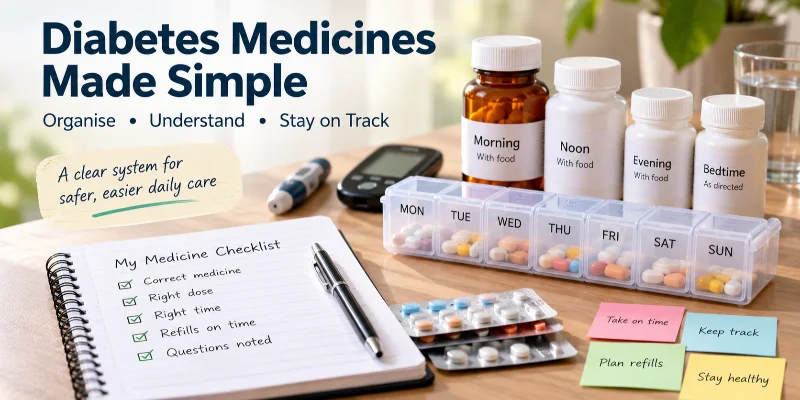

A diabetes prescription may be straightforward when it is first explained and confusing several months later. Packaging changes, an old strip remains in a drawer, another specialist adds a medicine, and a refill runs out before a holiday. These are ordinary organisational problems that can affect how a treatment plan is followed. A clear home system helps the person taking the medicines know what is current, what each instruction means, and when to ask for clarification. It should make daily care easier without changing the prescription itself.
Write the name, strength, dose, timing, and purpose of every current medicine, using the prescription and pharmacist's help. Include injections, non-prescription products, supplements, and medicines for other conditions. Add known allergies and the date the list was updated. A single complete record is more useful than separate lists held by different relatives. Keep a copy available for appointments so that another clinician can see what you are already taking before making a new treatment decision.
If you are unsure whether an old item remains current, ask rather than guessing. Bring the packaging to a pharmacist or clinician if the name is unclear. Do not identify a tablet only by colour or shape, since appearances can vary. Mark uncertain items for review and keep them from being accidentally mixed into the daily routine. The purpose of the initial exercise is accuracy. It is not an invitation to stop something that seems unnecessary or combine medicines that appear similar.
Ask what phrases such as "with food" or "before meals" mean for your particular medicine and routine. Clarify whether a dose relates to a specific meal or a time interval. If you work shifts or regularly miss breakfast, explain that before leaving with instructions. The NIDDK overview of diabetes medicines encourages discussion of practical questions about treatment, including missed doses and illness. Different medicines require different responses, so a general household rule may be unsafe.
Ask for a written answer to what you should do if a dose is forgotten. Do not double the next dose unless the prescriber has specifically instructed that for the medicine involved. If a dose may already have been taken but nobody is sure, contact a pharmacist or clinician for advice. A system that records administration can prevent this uncertainty. Choose a method you can maintain, such as a simple tick sheet, rather than a complicated app that is rarely opened.
Choose a clear, suitable location for current medicines and keep discontinued items separate until you obtain disposal advice. Follow storage instructions and keep medicines away from children. Avoid leaving several generations of prescriptions together without labels. A relative trying to help may otherwise select an older strip that looks familiar. When a clinician changes treatment, update the list and the daily arrangement at the same time. A changed prescription does not automatically remove outdated instructions from the kitchen or bedside table.
Do not throw away medicines needed for clarification before a pharmacist has identified them. Equally, avoid giving unwanted medicines to someone else. The fact that another person has diabetes does not make the treatment interchangeable. Ask about appropriate local disposal arrangements for medicines and sharps where relevant. The organisational goal is a clear distinction between what is currently prescribed, what is being reviewed, and what is no longer needed. That distinction should remain obvious to anyone authorised to assist.
A reminder should connect to a reliable event or a clearly labelled time in your individual plan. Some people prefer a paper chart; others use alarms. Label an alarm with enough detail to distinguish it from another medicine reminder, while considering privacy if the phone is visible to others. Check how the reminder behaves when the device is silent or the schedule changes. Technology can support a routine, but it cannot resolve an unclear prescription or confirm a dose that was never recorded.
If more than one person helps, agree who records each dose and where. Two well-meaning relatives can both act on the same reminder if the system does not show completion. A shared paper record in the medicine area may be easier than separate messages. For someone who manages independently, assistance can focus on refills rather than supervision. Ask what kind of support is wanted. The system should reduce uncertainty without making the person feel watched during every ordinary task.
Choose a regular day to check remaining supplies and expected appointment dates. Note the time needed to obtain a refill, including weekends or planned travel. If cost or availability is creating gaps, tell the clinician or pharmacist early. Do not stretch supplies by changing the prescribed dose. A treatment plan that cannot be obtained consistently needs an open discussion about practical options. Keeping the problem hidden can make glucose records look puzzling when the real issue is an interrupted supply.
Use a short refill checklist containing the medicine name, strength, quantity needed, and prescription status. Compare the supplied item with the current prescription before storing it. If the brand or appearance has changed, ask the pharmacist to confirm that it is the intended medicine and strength. This is particularly important when several people collect prescriptions for the household. A clear handover prevents a bag from being put away without anyone noticing that a question needs answering.
If you use insulin or another injection, ask for training with the actual device prescribed. Confirm the dose display, storage, use-by instructions after opening, and safe disposal of needles. Different products should not be assumed to work identically. Keep the manufacturer's instructions available and ask for another demonstration if anything is unclear. A change in pen design can matter even to an experienced user. Do not rely on advice about a different device simply because it looks similar.
Organise the supplies so that the correct product is easy to identify. If two injections are used, ask the pharmacist for a safe way to distinguish them without covering essential labels. Record opening dates where required by the product instructions. Keep a plan for power interruptions or travel if temperature-sensitive storage is involved. These details should be discussed with a qualified professional because storage limits vary. Guessing from the room temperature or copying a neighbour's arrangement can leave important uncertainties unresolved.
Bring the current list whenever you see another clinician, attend hospital, or receive a new prescription. After discharge, ask which previous medicines continue, which stop, and which have changed. Compare the new list with the home arrangement before restarting the usual routine. The National Institute on Aging medicine-safety guide explains why keeping professionals informed about all treatments matters. This is useful at any age when care is provided by more than one service.
If a discharge instruction seems to conflict with an existing prescription, seek clarification promptly rather than choosing the version that looks most familiar. Write down the answer and who provided it. A relative collecting medicines should receive the updated list, not a photograph of an old prescription forwarded earlier. Mark the previous version as superseded in your records. Clear version control may sound administrative, but at home it simply means that everyone is following the same current instructions.
A tidy system cannot replace a treatment review, but it can reveal questions worth discussing: repeated missed doses, difficulty using a device, side effects, or a schedule that does not fit daily life. Bring those concerns without embarrassment. Patients in Kannur can arrange a review through the Glycemia contact page with the medicine list and any unclear packaging. The useful outcome is a current prescription that you understand, a reliable refill routine, and a clear route for questions, so that everyday organisation supports the care plan rather than competing with it.