

Reading Food Labels with Diabetes: A Practical Supermarket Guide
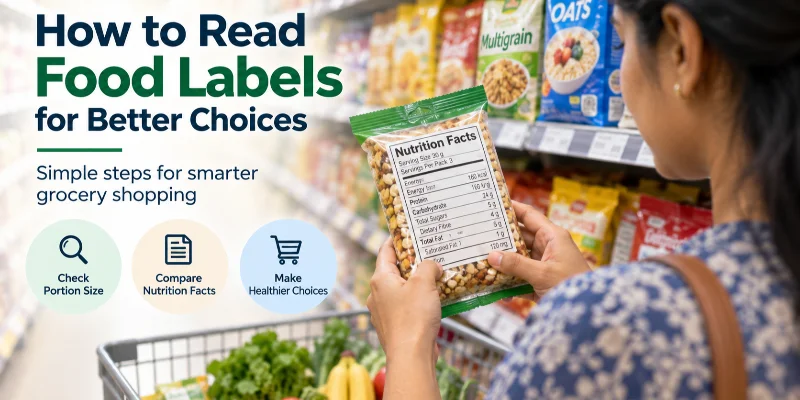

A supermarket shelf can make food choices feel more complicated than they need to be. One packet says multigrain, another highlights protein, and a third promises no added sugar. None of those phrases tells you the whole story of the portion you will actually eat. Learning a small, repeatable label-reading method can help you compare products without turning every shopping trip into a research project. This guide uses simple examples for households in Kannur that buy packaged snacks, breakfast foods, drinks, and everyday groceries alongside home-cooked meals.
Before comparing numbers, check whether the label describes one serving, 100 grams, 100 millilitres, or the whole packet. Two products can look very different simply because their stated quantities differ. A serving printed on a package is not automatically your recommended portion. The FDA explanation of serving sizes illustrates why the amount eaten changes the nutrient total. Labels sold in India may use different layouts, so read the units on the actual product in your hand.
Consider a made-up example: a snack contains 60 grams of carbohydrate per 100 grams, and the portion you eat weighs 30 grams. That portion contains 18 grams of carbohydrate. If you finish a 90-gram packet, it contains 54 grams. The arithmetic is multiplication, not a judgement about whether the food is morally good or bad. Write the calculation once if helpful: nutrient amount per 100 grams multiplied by portion weight, then divided by 100. A phone calculator can make this quick.
Use the same quantity when comparing two products, then consider your likely portion. Suppose one fictional breakfast cereal lists 24 grams of carbohydrate per 40-gram serving and another lists 18 grams per 30-gram serving. Both provide 60 grams per 100 grams. The smaller number on the second label does not make it lower in carbohydrate by weight. Examples like this explain why a front-of-pack comparison can be misleading even when every printed figure is mathematically correct.
You do not need to perform this calculation for every item forever. Start with two or three foods you buy frequently and note the portions that fit your meal plan. Keep photographs of the labels if your dietitian wants to review them. When the packaging or recipe changes, check again. A familiar brand name does not guarantee that the serving size or ingredients remain identical. The goal is a dependable shopping habit, not an expectation that you memorise a supermarket's entire range.
For diabetes meal planning, the carbohydrate information matters alongside sugars. A product can contain starch even when little sugar is listed. Depending on the label format, sugars are included within carbohydrate rather than being a separate amount to add again. Ask a dietitian to explain any format you find confusing. Avoid making insulin adjustments from a new label calculation unless you have been taught a personal carbohydrate-counting and dosing method. Reading a package is useful information, but it is not an independent prescribing tool.
Take a fictional biscuit labelled "no added sugar." If its carbohydrate figure is still substantial, the phrase does not make the portion unlimited. The practical question becomes how much you want to eat and how that amount fits the rest of the meal or snack. This approach avoids an all-or-nothing response. You can decide whether the product is enjoyable, affordable, and useful without expecting a marketing phrase to answer every nutrition question on your behalf.
The ingredient list can help explain what the product is made from, but it should be read with the nutrition panel rather than in isolation. A packet may emphasise one appealing ingredient while containing several others that influence the overall food. Ask what you are buying in practical terms: a staple, a snack, a dessert, or a drink. That simple classification can help you decide where it belongs in your usual routine and whether it is replacing something or being added on top.
Do not let a single unfamiliar ingredient name create unnecessary alarm. Equally, familiar words such as honey or jaggery do not remove the need to consider carbohydrate and portion size. If you have an allergy, a kidney-related restriction, or another specific medical requirement, seek guidance relevant to that condition. The same product can suit one person's needs and be unsuitable for another. Keep the comparison tied to your actual care plan rather than a universal list of approved and forbidden brands.
A breakfast product is rarely eaten alone. Milk, sweetened yoghurt, fruit, or an added topping can change the final meal. Likewise, a snack may come with a sweet drink that is forgotten when estimating the overall intake. Write down the complete combination when asking for advice. A photograph of the bowl and its ingredients can be more informative than sending only the cereal label. The clinician or dietitian can then discuss the meal as it is actually eaten at home.
For a homemade drink, the package may describe only one ingredient. The final amount depends on what you add and how much you prepare. This is a good reason to use a familiar cup or spoon when learning portions. It is not necessary to weigh every meal indefinitely, but an initial measurement can correct a misleading visual estimate. Once you understand your usual serving, you can make a more informed decision when the cup, bowl, or recipe changes.
Carbohydrate is not the only useful information. Fibre, protein, saturated fat, sodium, and overall energy may be relevant to your nutrition goals. Which detail deserves the most attention depends on the person and the food. Ask your dietitian to demonstrate this using products you already buy. A snack comparison may involve different priorities from choosing a staple ingredient. Trying to find one perfect number that ranks all foods usually creates more confusion than clarity.
Avoid choosing an expensive specialist product merely because the packaging addresses people with diabetes. Compare its ingredients, nutrition, portion, and price with ordinary alternatives. Sometimes a familiar food fits the plan just as well. This is especially important when a household budget must cover medicines, travel, and routine groceries. Good shopping guidance should help people make sustainable choices within their circumstances, not imply that better diabetes care depends on buying a separate range of branded foods for one family member.
Choose a short list before entering the shop. For one item, compare two labels using the same weight or volume. Decide the portion you would realistically serve and consider the price for that amount. Then make a choice and move on. Limiting the exercise prevents label reading from becoming exhausting. If a question remains, photograph the panel and ask at the next nutrition review. You do not need to resolve every uncertainty while standing in a crowded aisle.
At home, discuss the choice with whoever cooks or shops regularly. If only one person understands the intended portion, the plan may be lost when someone else serves the food. Use the actual bowl or packet to explain it. Keep the conversation neutral: the aim is shared understanding, not policing another adult's plate. A household that can compare quantities calmly is better equipped to respond to new products and changing routines without repeatedly returning to strict food rules.
For tailored advice, bring two or three labels, your usual serving sizes, and the questions that caused difficulty. Patients in Kannur can arrange a diabetes review through the Glycemia contact page and ask about suitable nutrition support. A useful consultation should leave you able to compare an actual portion, recognise the limits of marketing claims, and fit packaged foods into the wider eating pattern. Those practical skills matter more than memorising slogans or searching for a packet that promises to solve diabetes by itself.