
Travelling with Diabetes: A Planning Guide for Families in Kannur

A journey can be enjoyable and still require a little extra preparation when you have diabetes. A train may arrive late, a family function may postpone dinner, or a flight may change the timing of a usual medicine. None of these possibilities means that travel must be avoided. They mean that your care routine needs a travel version. For people leaving Kannur for work, a holiday, or a visit to relatives, the most useful preparation begins with the actual itinerary rather than a generic packing list.
Write down the departure time, likely meal breaks, length of travel, overnight stops, and return date. Include the journey to the station or airport, which is easy to overlook. A flight lasting a few hours may involve a much longer day away from home. Show this outline to your diabetes team if medicine timing, insulin, or a change of time zone needs discussion. Ask for written instructions rather than trying to calculate unfamiliar dosing intervals while tired or in transit.
Think about the destination as well. Staying with family offers different options from a hotel room without a refrigerator or a remote work site. Ask about food availability and safe storage before booking where possible. If a family member is hosting you, explain a few practical needs without turning the visit into a medical event. A predictable breakfast time, space for supplies, and permission to use the kitchen may be enough to make the ordinary routine much easier to maintain.
Keep essential medicines, monitoring equipment, and the agreed treatment for low glucose accessible during the journey. Carry more supplies than the minimum itinerary requires, since delays can happen. Protect insulin and testing equipment from unsuitable temperatures and follow the specific product storage instructions. Medicines should not be left in a hot vehicle or placed directly against ice. These travel precautions are outlined in the CDC guide to travelling with diabetes.
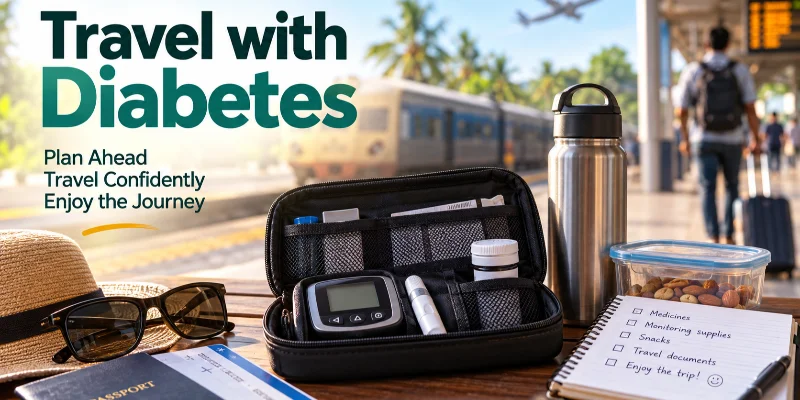
Use a packing checklist with separate spaces for items packed and items used before departure. A meter can be checked off the night before and then accidentally left on a bedside table after a morning test. The second check catches that gap. Include charging cables or batteries where relevant, but avoid assuming that every device has the same requirements. Keep original labels with medicines and a readable prescription copy. If a bag is misplaced, accurate names and strengths are more useful than descriptions of tablet colours.
For international travel, ask the treating team how the schedule should work during both the outward and return journeys. The return trip may not be the same calculation in reverse. Write the instructions using clearly labelled local times and dates. If your phone changes time automatically, consider how this affects alarms and records. Confirm the plan for your particular treatment instead of copying advice from another traveller, even if that person also uses insulin or has a similar diagnosis.
For journeys within India, the main issue may be delayed meals rather than time zones. Make a plan for a missed food stop or a late arrival. Keep suitable food available according to your care plan, and tell your companion if a delay creates a problem. Do not take extra medicine simply because a restaurant meal looks larger than usual unless your clinician has given you a specific adjustment method. Travel preparation should reduce improvisation, especially when the surroundings are unfamiliar.
Transport operators and destinations may have different rules for medicines, liquids, needles, and medical devices. Check the current requirements directly with the airline, airport, or relevant authority before travelling. Ask the device manufacturer about screening procedures if you use a pump or sensor. Keep any required documentation with the travel papers. The point is to resolve practical questions early; rules described for one country or airport should not be assumed to apply to a journey starting in Kerala.
Create a small document envelope or secure digital folder containing the itinerary, prescription, relevant medical summary, and contact details. Take care with privacy when sharing documents through messaging apps or public printers. A trusted companion may need access to essential information, while other travellers do not. If you rely on a digital copy, ensure it is available without internet access. A simple paper backup can save time when a phone is discharged or a connection is unreliable.
New food is often part of the pleasure of travel. Before the trip, discuss a realistic approach to unfamiliar meals rather than planning to avoid every restaurant. Look at portion sizes, meal timing, and what drinks accompany the food. A buffet can be easier to navigate if you first look at the available options and then choose a meal, instead of repeatedly filling a plate. Keep the discussion practical and flexible so that eating remains a normal part of the experience.
When visiting relatives, say what helps you rather than presenting a long list of forbidden dishes. You might request that a portion be kept aside if dinner will be late, or ask what time breakfast is usually served. These are ordinary arrangements that can prevent awkwardness. If the host is enthusiastic about offering sweets, a polite response prepared in advance may help. The person with diabetes should make their own choices without being publicly questioned about every item on the plate.
Discuss when to check glucose during travel, particularly if activity and meal patterns will differ substantially. Keep a brief record of unusual readings and their context. An isolated result during a disrupted day may require a different conversation from a repeated pattern after returning home. Follow the action thresholds in your personal plan. If you feel unwell, seek appropriate help instead of assuming that symptoms are only tiredness from the journey or that they can wait until the holiday ends.
Break up long periods of sitting when it is safe and practical, and plan comfortable footwear for walking. Inspect your feet if you have been exploring more than usual. Do not let an ambitious sightseeing schedule override a need to rest or address a problem. A companion can help by building reasonable pauses into the day rather than repeatedly asking whether you are keeping up. Good travel planning leaves room for the actual energy and comfort of the people travelling.
A companion does not need to become a diabetes expert. They should know where essential supplies are, what your written low-glucose response says, and how to get emergency help if you cannot manage yourself. Agree how much information you want shared with others. If you prefer to handle most tasks independently, make that clear. Support works best when it is available without becoming constant supervision. The conversation can be brief, specific, and focused on the situations where assistance would be useful.
For solo travel, decide who will receive an arrival message and where you will seek care if needed. Keep emergency details accessible in a way that respects your privacy. If plans change, update the person expecting to hear from you. These arrangements are useful for many travellers and do not need to make the trip feel restrictive. The aim is to create a reliable route to assistance while allowing the journey itself to remain the main focus of your attention.
After the trip, note anything that should change next time: a bag that was difficult to access, unclear medicine instructions, or a food stop that did not work. Restock supplies before putting the travel kit away. If readings or symptoms remain unusual, arrange a review and bring the record. For pre-travel diabetes advice in Kannur, use the Glycemia contact page to organise a routine consultation in advance. A plan tailored to your route and treatment can make travel feel more manageable from departure to return.