
Diabetes Sick-Day Planning: Preparing for Fever, Vomiting and Poor Appetite
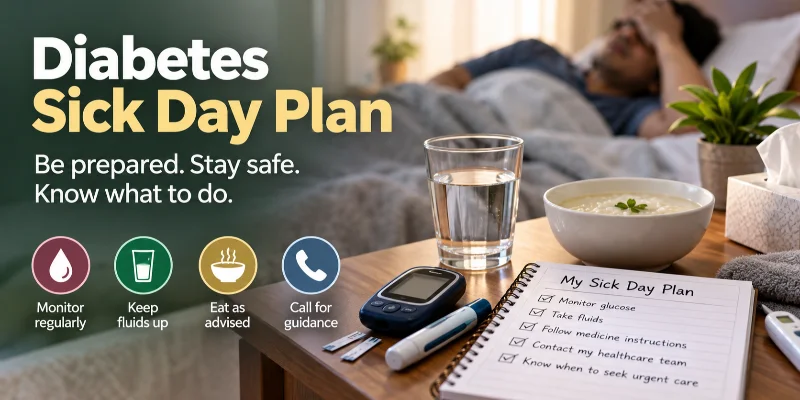

A fever or stomach illness can disrupt a diabetes routine within hours. Meals become smaller, water intake changes, and usual tasks feel exhausting. Families may wonder whether a medicine should be taken without breakfast or whether a high reading simply reflects the infection. These questions are easier to answer when a personal sick-day plan already exists. The purpose of planning is not to predict every illness. It is to decide what to monitor, whom to contact, and when home care is no longer enough.
At a routine appointment, ask your clinician for written sick-day instructions for your actual medicines. Some treatments need special handling during vomiting, dehydration, or poor intake. Insulin must not simply be stopped, particularly in type 1 diabetes, but doses may require clinical guidance. A general internet instruction cannot account for your prescription, kidney function, or usual glucose pattern. The NIDDK guide to diabetes medicines includes asking what to do when illness prevents normal eating.
Make the instructions specific enough for another person to follow if you feel too unwell. Instead of writing "adjust medicines if necessary," ask the clinician to document which medicine is involved, what situation triggers a call or temporary change, and how to restart safely. Keep this information beside the prescription. Whenever treatment changes, ask whether the sick-day sheet also needs updating. An old plan can create confusion if it names tablets that are no longer part of the current routine.
Illness can raise glucose even when you eat less, because the body's stress response affects blood sugar. Poor intake can also create a risk of low glucose with some treatments. Your team may recommend more frequent checks and, where appropriate, ketone testing. Diabetic ketoacidosis is an emergency. Trouble breathing, severe drowsiness or confusion, persistent vomiting, or inability to keep fluids down warrant urgent assessment. The CDC sick-day guidance explains why illness deserves closer monitoring and clear escalation instructions.
The practical lesson is to avoid guessing from appetite alone. A person who has eaten little may expect a low reading and be surprised by a high result. Write down the number, the time, and relevant symptoms before calling for advice. If the meter displays an error, use its instructions rather than recording the error as a glucose result. Keep a functioning backup arrangement agreed with your team, especially if your usual monitoring method depends on a phone or rechargeable device.
A sick-day folder can hold the medicine list, allergies, usual clinic details, emergency contact, written action plan, and the location of supplies. A paper copy remains useful when a phone battery runs out. If you live alone, tell a trusted person where the folder is kept. Choose someone who can check in or help organise transport if necessary. This does not require sharing every health detail; it requires making essential information available when you may have difficulty explaining it yourself.
Prepare a simple recording page with spaces for time, temperature if measured, glucose, fluids taken, food tolerated, medicines, and advice received. Leave room for the name of the clinician contacted and the next planned check. Recording a telephone instruction immediately reduces the chance of mixing it up later. If you are unsure what was said, repeat the instruction back before ending the call. Clear communication becomes especially valuable when several family members are helping at different times of day.
Ask your care team what to drink and eat when you cannot manage ordinary meals. The advice should account for glucose readings, medication, and any fluid restriction for heart or kidney problems. Keep a few familiar options available rather than waiting until the illness begins. In a Kerala household, this may involve discussing which simple foods you tolerate and how to portion them. The aim is an agreed alternative, not a universal menu or a fixed amount of carbohydrate for every reader.
Store the chosen supplies where someone can find them. Label any drinks intended for treating a low separately from routine refreshments, so their role is clear. A household shopping list can include replacements when items are used. If another person prepares food, explain the current instructions directly rather than relying on messages passed through several relatives. During illness, the most useful meal is often the one that fits the clinician's advice and can be prepared without adding unnecessary work or confusion.
Before phoning, gather the latest readings, medicine names, symptoms, and an estimate of how long the problem has lasted. Mention whether you can keep fluids down and whether you have followed any ketone-testing instructions. If you use an insulin pump or another device, explain any interruption or alarm. This preparation helps the professional understand the situation more quickly. Do not delay urgent care to complete a perfect record; the folder is a communication aid, not a condition for receiving help.
Ask what should happen next and what would change the plan. For example, clarify when to repeat a measurement, when to call again, and which symptoms mean going directly for emergency assessment. Write those steps in order. If the usual clinic is closed, use the alternative contact or emergency service specified in your plan. A routine online appointment form is not an emergency response channel. Families should know this distinction before an illness makes decisions feel hurried and uncertain.
When relatives take turns helping, use one shared record. Separate notebooks or scattered phone messages can lead to duplicated doses or conflicting accounts of what was eaten. Agree who records each medicine administration and who is responsible for the next call. If the person with diabetes normally manages independently, involve them as much as their condition allows. Assistance should reduce workload while preserving their voice. Explain changes in the plan clearly, even when everyone is tired and trying to be helpful.
Consider a household where one relative stays in the morning and another arrives after work. A short handover can cover the latest reading, last medicine taken, fluids tolerated, advice received, and next action. The second helper should not have to reconstruct the day from memory. Keep the handover factual and brief. If a symptom is getting worse, say so explicitly rather than using a vague phrase such as "about the same." Accurate observations help the next person recognise when further action is needed.
As appetite and activity return, ask when to resume any medicines that were temporarily changed and whether extra monitoring should continue. Feeling better does not automatically answer every treatment question. Keep the illness record until the next review, particularly if there were significant glucose changes or urgent medical visits. It can help identify which instructions worked and where confusion arose. Replace used supplies, update contact details, and remove outdated versions of the plan so the household is ready for another unexpected illness.
Patients in Kannur can use a routine diabetes appointment to request this preparation rather than waiting for a fever. Bring the current prescription and explain any previous difficulty managing vomiting, poor intake, or high readings during illness. The Glycemia contact page can help you arrange a non-emergency review. Ask for a practical, written plan that reflects your medicines and health conditions. A small amount of preparation while you feel well can make a demanding sick day more organised and easier to communicate about.