

Diabetic Neuropathy and Foot Care: Protecting Your Nerves and Mobility
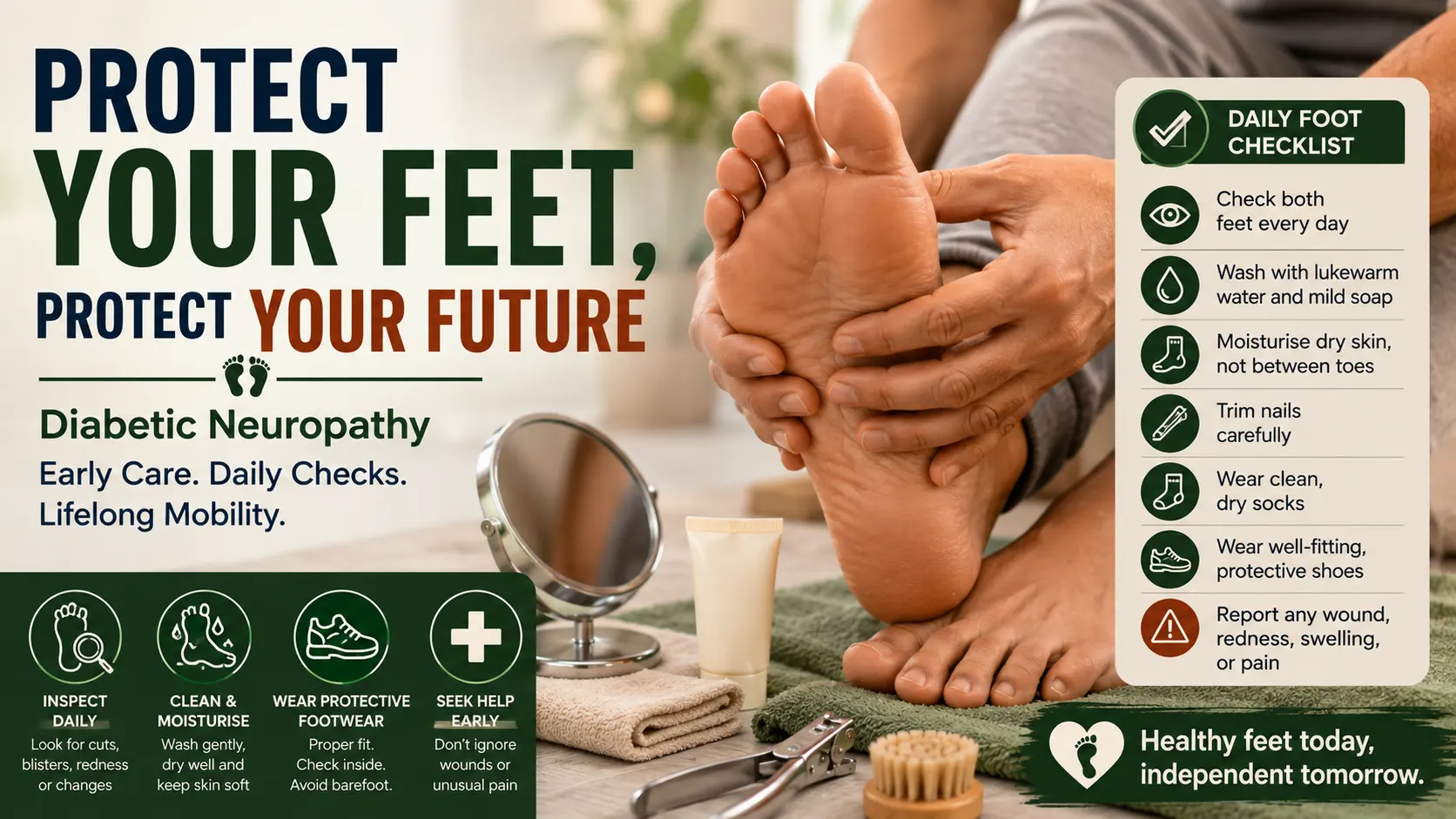

Diabetic neuropathy is nerve damage associated with diabetes. It most commonly affects the feet and legs, although different forms can influence digestion, heart rate, bladder function and other systems. Peripheral neuropathy matters because reduced feeling can allow a blister, cut or burn to go unnoticed. Combined with poor circulation or slower healing, a small problem can become an infection or ulcer. Daily foot care and early treatment protect not only the skin but also independence and mobility.
Persistently high glucose can damage nerves and the small blood vessels that supply them. Duration of diabetes, glucose control, blood pressure, cholesterol, kidney disease, smoking and alcohol can influence risk. Neuropathy usually develops gradually. Improving glucose and wider cardiovascular risk factors can help prevent or slow further damage, although established symptoms may take time to change.
Not every tingling sensation is caused by diabetes. Vitamin deficiencies, thyroid disorders, spinal problems, medicines and other conditions can produce similar symptoms. A proper assessment considers the pattern, reflexes, sensation, pulses, medicine history and appropriate tests. Assuming every symptom is diabetic neuropathy can delay another diagnosis.
Symptoms may include numbness, tingling, pins and needles, burning, stabbing pain, unusual sensitivity or a feeling of wearing socks when barefoot. Some people lose the ability to sense heat, cold or injury without experiencing pain. Symptoms can be worse at night and interfere with sleep. Balance may become less reliable when the feet provide less information about the ground.
Report new or worsening symptoms. A clinician may check sensation with simple tools, examine skin and nails, assess foot shape and feel pulses. Shoes and walking pattern can reveal pressure points. The earlier a risk is identified, the easier it is to prevent repeated injury.
Choose a consistent time, such as after bathing or before bed. Look at the tops, soles, heels and spaces between toes. Use a mirror or ask a family member if reaching the sole is difficult. Check for cuts, cracks, blisters, redness, swelling, colour change, callus, drainage or a foreign object. Compare both feet so a new difference is easier to notice.
Do not wait for pain. Loss of sensation means a serious wound may be painless. A blister caused by a tight shoe can continue to receive pressure with every step. Early protection and clinical advice can prevent deterioration.
Wash feet with comfortably warm water and mild soap, then dry gently, especially between the toes. Test water temperature with an elbow or thermometer if sensation is reduced. Avoid soaking for long periods because it can soften and damage skin. Apply moisturiser to dry skin on the tops and soles, but avoid heavy cream between toes where excess moisture can encourage fungal growth.
Do not use hot water bottles, heating pads or place feet close to a heater. Reduced sensation makes burns more likely. In Kannur’s humid climate, keep socks dry and change them when wet. Treat fungal itching, peeling or nail changes with professional guidance rather than allowing them to continue.
Trim nails straight across and smooth sharp edges gently. If nails are thick, curved, difficult to reach or surrounded by poor skin, seek trained help. Do not cut corns or calluses with blades and do not use strong chemical corn removers without advice. Callus can mark an area of high pressure and may conceal damage underneath.
Foot shape changes, prominent bones and limited joint movement can concentrate pressure. A clinician may recommend footwear changes, insoles or podiatry care. Removing surface hardness without addressing pressure allows it to return.
Shoes should have enough room for toes, a secure fit and an interior free from rough seams or objects. Check inside with your hand before wearing them. New shoes should be introduced for short periods while the skin is inspected. Avoid walking barefoot indoors or outdoors because sharp objects, hot surfaces and minor impacts may not be felt.
Socks should fit without tight bands and should not bunch inside the shoe. Breathable material and clean dry pairs help protect skin. If one foot suddenly becomes swollen, warm or changes shape, do not force it into the usual shoe. Seek assessment promptly.
A wound, spreading redness, warmth, swelling, pus, bad smell, dark skin, fever or a new area of blue or black colour needs urgent medical attention. So does a foot that becomes hot and swollen with little pain, especially in someone with neuropathy. Do not treat a deep wound at home, walk repeatedly on it or delay because glucose seems controlled.
Initial first aid for a minor clean cut can include gentle cleaning and protection, but diabetes changes the threshold for review. A wound that is not clearly improving, any puncture, burn or injury with poor circulation should be assessed early. Infection can progress faster than expected.
Daily foot care prevents injury, while better glucose control helps reduce ongoing nerve and healing risk. Blood pressure, cholesterol, kidney health and smoking also affect circulation. Regular activity can support blood flow and glucose, but the type of exercise may need adjustment if there is an ulcer, severe loss of sensation or deformity. Non-weight-bearing options may be recommended during healing.
Wet footwear and prolonged dampness can soften skin and encourage fungal infection. During monsoon weather, carry a dry pair of socks when needed and allow shoes to dry completely. Do not remain in soaked footwear. After walking through water, wash, dry and inspect the feet, including between the toes.
During travel, avoid sitting for very long periods without movement when it is safe to stand, and do not walk barefoot in hotel rooms, stations or outdoor areas. Pack dressings, prescribed medicines and suitable footwear rather than relying on whatever is available at the destination. Check feet at the end of each travel day.
Loss of sensation can affect balance, especially in dim light or on uneven ground. Keep walkways clear, use adequate lighting and hold a rail on stairs. Strength and balance exercises may help when selected for the individual. A walking aid should be assessed and fitted correctly rather than borrowed casually.
Falls, even without an obvious wound, deserve attention if the foot becomes swollen or difficult to bear weight. Neuropathy can reduce pain from a fracture or joint injury. Protecting mobility means responding early rather than trying to walk through an unexplained change.
Ask for a foot assessment at suitable intervals and whenever symptoms change. Bring the shoes you wear most often if pressure or blisters are a problem. Discuss pain treatment carefully because symptom relief and protection from injury are separate goals. Even when pain improves, reduced sensation may remain.
Glycemia’s personalised diabetes care includes attention to complications and daily prevention. Learn how monitoring fits together in the guide to understanding HbA1c. If you notice numbness, burning or a foot wound, contact the clinic through the appointment page. A few minutes of inspection each day can preserve healthy movement for years.