

HbA1c Explained: What Your Three-Month Blood Sugar Story Really Means
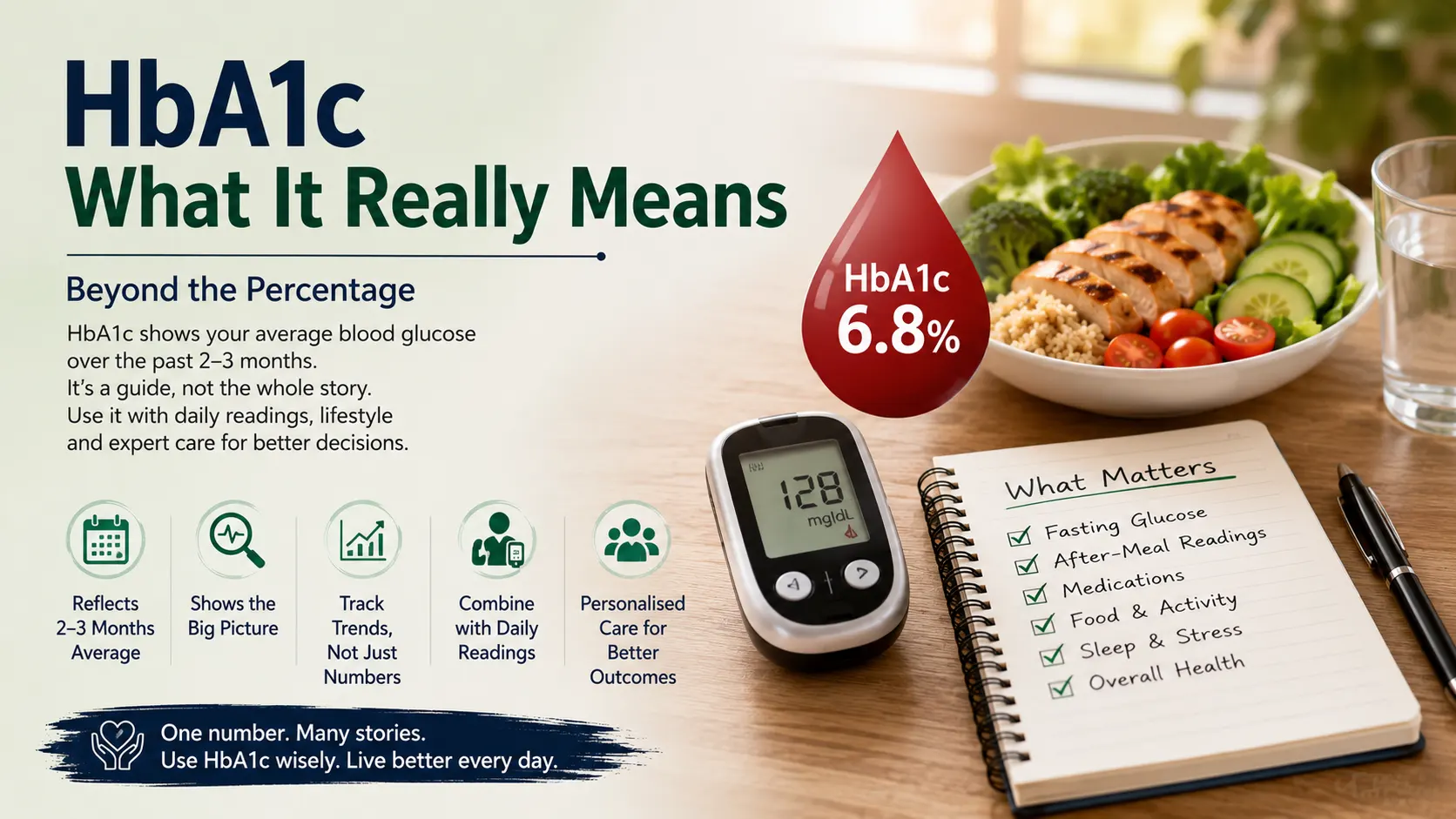

HbA1c is one of the most familiar numbers in diabetes care, but it is also one of the most misunderstood. Patients may describe it as a three-month sugar test, a diabetes percentage or a final score. In reality, HbA1c is a useful estimate of average glucose exposure over recent weeks. It helps clinicians identify prediabetes or diabetes in suitable circumstances and follow the direction of glucose control over time. It is valuable, but it should be interpreted alongside the person’s daily readings, symptoms, treatment and overall health.
Glucose circulating in the blood attaches naturally to haemoglobin, the oxygen-carrying protein inside red blood cells. HbA1c measures the proportion of haemoglobin with glucose attached to it. Because red blood cells remain in circulation for several months, the result reflects a longer period than a fasting or after-meal test. Recent weeks can influence the value more than the earliest part of that period, so meaningful improvement may begin before the full change appears in the result.
For many non-pregnant adults, an HbA1c below 5.7 percent is considered outside the prediabetes range, 5.7 to 6.4 percent is in the prediabetes range, and 6.5 percent or higher can indicate diabetes when appropriately confirmed. These diagnostic thresholds are not the same as an individual treatment target. A personal target depends on age, duration of diabetes, other illnesses, medicine-related low glucose risk and clinical priorities.
An average can hide variation. Two people may have the same HbA1c while experiencing very different days. One may have fairly steady readings, while another moves repeatedly between high and low glucose. The second pattern can be more difficult and potentially less safe even though the average looks similar. Home glucose monitoring or continuous glucose data, when appropriate, can reveal patterns that HbA1c cannot.
HbA1c also does not explain why glucose changed. A higher result may relate to meal portions, reduced activity, illness, stress, sleep disruption, medicine adherence or progressive changes in insulin production. A lower result may reflect genuine improvement, but it could also include frequent unrecognised low readings in someone using insulin or certain medicines. The number starts a clinical conversation; it does not finish one.
HbA1c depends partly on the life and characteristics of red blood cells. Anaemia, recent blood loss, transfusion, some haemoglobin variants, pregnancy, advanced kidney disease and other conditions can make the result less representative of average glucose. Laboratories and clinical teams consider these factors when results do not fit the patient’s home readings or symptoms. A fasting glucose test, oral glucose tolerance test or another monitoring method may be needed for clarification.
This is why patients should share relevant medical history rather than viewing HbA1c as an independent verdict. If the result changes unexpectedly, first confirm the context. Ask whether there was recent illness, a medicine change, altered diet, reduced activity or a condition affecting blood cells. Repeating or comparing tests may be more useful than making a major decision from an unexplained value.
Fasting glucose reflects the balance between insulin action and glucose released by the liver overnight. A high morning reading may be influenced by late meals, sleep, medication timing or the natural early-morning rise in hormones. After-meal readings show how the body handled the amount and type of food, insulin response and activity around that meal. Both can be elevated, or one pattern can dominate.
Recording the time of a reading matters. A result taken one hour after a meal cannot be compared directly with one taken two or three hours later. The meal, portion and activity should also be noted when investigating patterns. Monitoring should follow a purpose agreed with the treatment team, especially for people at risk of low blood glucose.
The interval depends on the situation. When treatment has changed or glucose is not at the agreed goal, the clinical team may review HbA1c more frequently. When readings are stable and the plan is working, longer intervals may be suitable. Testing too soon after a change can underestimate the full effect because the result still includes earlier weeks. Waiting too long can delay a needed adjustment.
People with prediabetes may be tested periodically according to their risk profile, while someone with diabetes needs a schedule linked to treatment and stability. The date of the next test should have a reason. Between tests, daily habits and selected home readings provide immediate information that can keep the plan moving.
If HbA1c is rising, ask where the change is occurring. Are fasting readings higher, are meals producing large spikes, or are both patterns present? Has physical activity declined? Is sleep irregular? Are medicines being missed because of side effects, cost or routine? Is the monitoring method capturing enough information? These questions lead to more precise action than simply deciding to eat less.
If HbA1c is improving, identify which behaviours are sustainable. Perhaps portions became more consistent, walking increased or medicine timing improved. Protect those successful habits. Then choose one additional goal instead of changing everything at once. Improvement is easier to maintain when the patient understands what contributed to it.
HbA1c shows glucose exposure; it does not directly measure pancreatic beta cell number or function. In type 2 diabetes, insulin resistance and declining insulin production can both influence the result. This is why Glycemia looks beyond the percentage when assessing a patient. The clinic considers the wider metabolic pattern and its focus on pancreatic health within a personalised programme.
Readers interested in this approach can visit the beta cell regeneration technology page and the Glycemia treatment page. These pages explain how the clinic connects glucose monitoring with a broader focus on the underlying processes involved in diabetes.
Write down the date of the test, any recent illness and the main changes made since the previous result. Bring home readings and a complete medicine list. This preparation helps the consultation focus on patterns and decisions rather than memory alone.
Do not compare your target automatically with another person’s target. Do not stop medicine because one result improved, and do not assume a higher result means that every effort failed. Avoid making dramatic food or exercise changes without considering medicines that can cause low glucose. Finally, do not ignore symptoms merely because HbA1c appears acceptable. New vision changes, chest symptoms, severe weakness, repeated low readings or foot wounds need timely attention.
The most helpful interpretation combines HbA1c with fasting and after-meal patterns, treatment, symptoms and personal goals. It tells a three-month story, but the details come from everyday life. A thoughtful review can identify where progress is happening and where support is needed next.
Bring your HbA1c report, medicines and glucose log to a consultation rather than trying to interpret the percentage alone. For an individual review in Kannur, use the Glycemia appointment page. You can also read how insulin resistance changes glucose control.