

Insulin Resistance Explained: Causes, Early Signals and Practical Next Steps
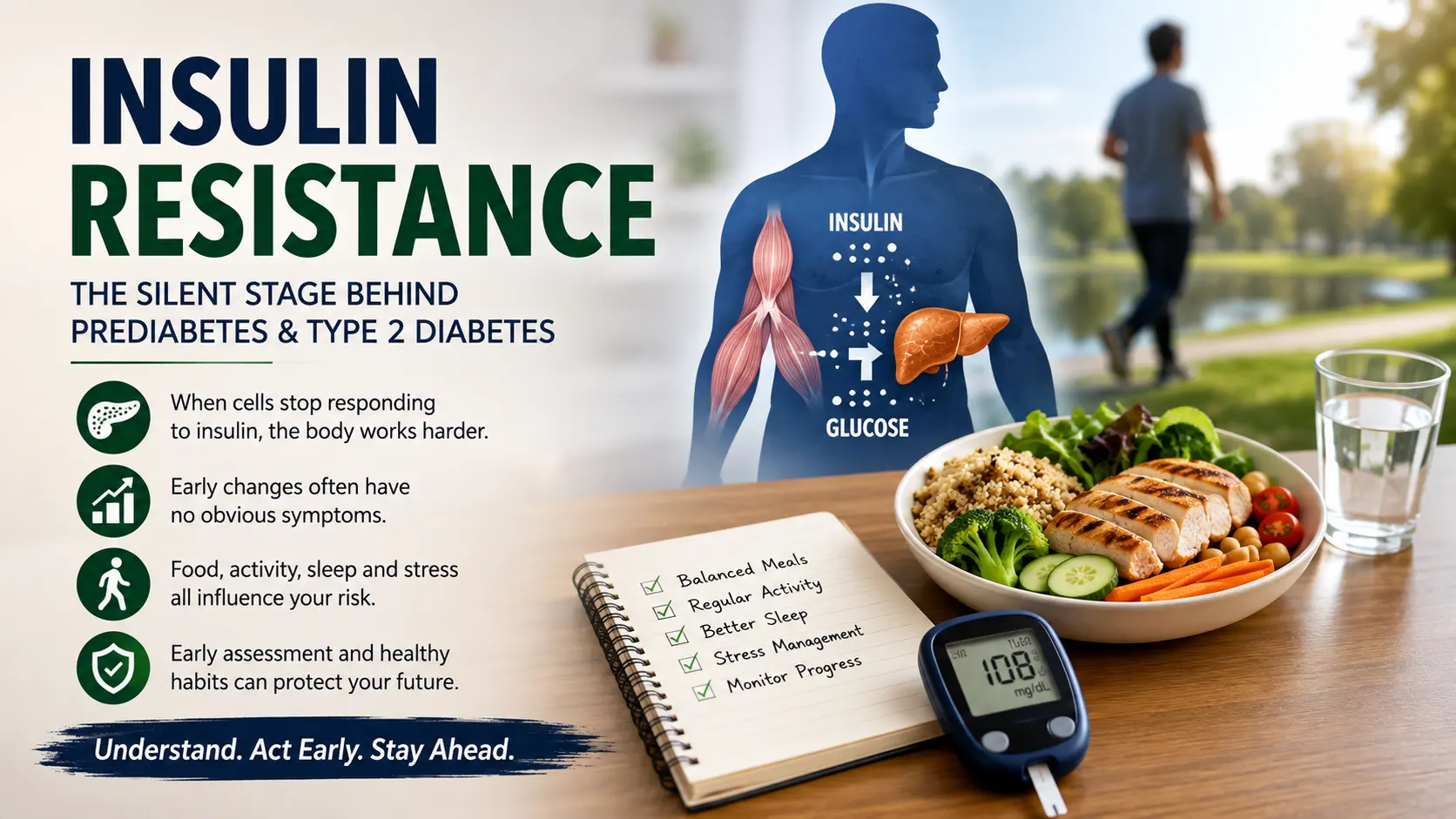

Insulin resistance is one of the central processes behind prediabetes and type 2 diabetes, yet it often develops quietly. A person may feel reasonably well while the body is working harder to keep glucose within range. Understanding this stage creates an opportunity to act before blood sugar rises further. It also helps people see that diabetes is not caused by one food or one bad decision. It develops through an interaction of biology, family history, body composition, activity, sleep, nutrition, medicines and time.
After carbohydrate-containing food is digested, glucose enters the bloodstream. The pancreas releases insulin, which acts like a signal that helps muscle, fat and other cells take in glucose for immediate energy or storage. The liver also responds to insulin by regulating how much glucose it releases. In a well-balanced system, insulin and glucose rise and fall in a coordinated way.
Insulin resistance means that muscle, fat and liver cells do not respond to insulin as efficiently as they should. The pancreas may compensate by producing more insulin. For a period, glucose readings can look normal because the pancreas is doing extra work. If resistance continues and beta cells cannot meet the increasing demand, glucose begins to rise. This may first appear as prediabetes and later as type 2 diabetes.
There is usually no single sensation that announces insulin resistance. Some people notice tiredness after meals, increased hunger, weight gain around the waist or difficulty losing weight, but these experiences are not specific enough to diagnose the condition. Others have no obvious symptoms. Testing and risk assessment are therefore more reliable than waiting to feel unwell.
Changes often occur gradually. Fasting glucose may remain acceptable while glucose after meals rises. Triglycerides may increase, blood pressure may climb or fatty liver may be found during an unrelated scan. Darkened, thickened skin around the neck or underarms can occur in some people. Each clue needs professional interpretation because the same sign can have other causes.
Excess abdominal fat is strongly connected with insulin resistance because fat tissue is metabolically active and can influence inflammation and hormone signalling. Physical inactivity also matters because active muscle is an important site for glucose use. A family history of type 2 diabetes, increasing age, previous gestational diabetes, polycystic ovary syndrome, sleep problems and some medicines can add to risk.
South Asian adults may develop metabolic risk at lower body weights than some other populations, so appearance alone should not determine whether testing is needed. A person can have a body weight that seems normal while carrying more fat around the abdomen or having low muscle mass. This is why waist measurement, family history and laboratory results can be more informative than assumptions based on size.
When muscle cells are resistant to insulin, they take up less glucose after meals. When the liver is resistant, it may continue releasing glucose even when the body does not need more. This can contribute to high fasting readings. Excess energy can also be stored as fat in the liver, linking insulin resistance with metabolic fatty liver. These processes can reinforce one another over time.
Building and using muscle can improve the body’s capacity to handle glucose. Regular walking helps, while appropriate resistance exercise adds another benefit by supporting muscle strength. Activity should be matched to health status. Anyone with chest discomfort, severe breathlessness, advanced eye disease, foot wounds or significant neuropathy should obtain clinical guidance before changing exercise substantially.
Beta cells are the pancreatic cells that produce insulin. During insulin resistance they may need to produce more insulin to keep glucose controlled. This compensation can continue for years, but the ability to maintain it differs between individuals. When beta cell function declines, glucose rises more easily. Addressing insulin resistance reduces the demand placed on the pancreas and is therefore an important part of metabolic care.
Glycemia places particular attention on pancreatic and beta cell health within its treatment philosophy. The beta cell regeneration technology page explains the clinic’s approach, while the diabetes treatment page describes how it fits into personalised care. Assessment is important because insulin resistance, insulin deficiency and medicine response are not identical in every patient.
Fasting plasma glucose, HbA1c and an oral glucose tolerance test are commonly used to identify prediabetes or diabetes. These tests examine glucose rather than directly measuring insulin resistance in everyday clinical practice. Different tests can sometimes give different impressions, which is why a clinician considers the full picture and may repeat or combine tests when needed.
HbA1c reflects average glucose exposure over roughly the previous two to three months, but it can be affected by certain blood conditions and other factors. Fasting glucose captures one moment. A post-meal reading shows how the body managed a particular meal. Lipid tests, liver markers, blood pressure and waist measurement may provide additional context. Diagnosis should be based on validated tests and clinical interpretation.
Improving insulin sensitivity does not require eliminating every carbohydrate. Quality, portion and combination matter. Vegetables, pulses, suitable whole foods and adequate protein can increase fullness and slow the pace of a meal. Sugary drinks and frequent refined snacks can add a large glucose load without much satiety. Reducing oversized portions is often more sustainable than banning familiar foods completely.
Meal timing also deserves attention. Constant grazing, very late heavy meals or long gaps followed by overeating can make glucose patterns harder to manage. The best structure depends on medicines, work hours and individual response. People using insulin or glucose-lowering medicines should not make major meal changes without considering the risk of low blood sugar.
Short or irregular sleep can affect appetite, food choices and insulin sensitivity. Stress hormones can also influence glucose and make healthy routines harder to maintain. A practical plan includes a consistent sleep window where possible, time to wind down and attention to snoring or excessive daytime sleepiness. Persistent sleep problems deserve assessment rather than being treated as a lack of discipline.
Stress management can be simple and repeatable: breathing practice, walking, prayer, conversation, planned breaks or reducing avoidable overload. The purpose is not to remove every stressor but to improve recovery and reduce the behaviours that often follow stress, such as late eating, missed medicines or poor sleep.
A useful first goal may be walking consistently, adding vegetables to two meals, replacing sugary drinks, improving bedtime or recording glucose at agreed times. Progress should be reviewed with data. Even when weight does not change quickly, improved activity, food quality and sleep can support metabolic health. When weight reduction is appropriate, gradual loss can meaningfully improve insulin sensitivity.
Insulin resistance is not a verdict. It is a signal that the body needs a different balance of demand, recovery and support. Early assessment gives more time to act. If you have a family history, rising glucose, increased waist size or other concerns, arrange a review through the Glycemia clinic contact page and read the guide to the Glycemia treatment journey.