Diabetes and Adult Vaccination: Preparing for a Useful Vaccine Review

When you manage diabetes, appointments can become crowded with prescriptions, glucose reports, and meal questions. Vaccination is easy to overlook, especially when old records are missing or you are unsure which doses were received. People with diabetes can face greater risks from certain infections, so a vaccine review is worth including in routine care. The right schedule depends on your age, previous doses, health conditions, and current local recommendations. Rather than copying a foreign schedule from a blog, use a structured conversation with your clinician to identify what is due and how to document it.
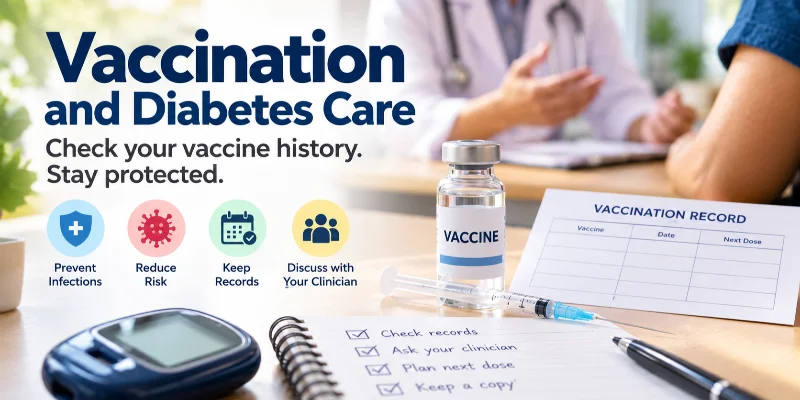
Look for vaccination cards, clinic receipts, hospital records, and messages confirming previous doses. Make a simple list with the vaccine name and date when known. If details are uncertain, write uncertain rather than inventing them. A clinician can decide how to handle missing records. Mention previous serious reactions, allergies, immune-suppressing treatment, pregnancy, and any upcoming travel. These details can affect decisions. The goal is a clear history that supports safe recommendations, not a test of whether you remembered every childhood injection.
Vaccines commonly discussed in adults include influenza, pneumococcal disease, hepatitis B, shingles, tetanus-related vaccines, and COVID-19. Which ones apply, and when, require current guidance and individual assessment. A recommendation published for one country or age group should not be automatically transferred to everyone in Kerala. Product availability and previous vaccination also matter. Ask the clinician to separate what is due now from what may be needed later, and to explain the reason in ordinary language. This makes a multi-dose plan easier to follow.
Ask whether a dose can be given during an existing appointment or whether a separate visit is necessary. Discuss cost and access before agreeing to a plan that will be difficult to complete. If more than one dose is needed, record the next date and the clinic contact. Keep the information with your other health records so future clinicians can see it. A phone reminder can help, but a paper note may be just as useful. Choose the format you will actually check when your schedule changes.
Some people have temporary soreness or feel unwell after vaccination. Ask what effects to expect, how to manage them, and which symptoms need medical attention. Keep your usual diabetes instructions accessible, including any sick-day guidance your care team has provided. Do not stop insulin or other medicines automatically because you received a vaccine. If appetite or glucose changes significantly, use your established monitoring and contact plan. An allergic reaction with breathing difficulty, throat swelling, or collapse requires emergency care rather than waiting for a routine callback.
A broad fear that vaccines are unsafe can be hard to discuss. Try naming the actual concern: a previous reaction, a friend's experience, cost, the number of injections, or whether a particular product suits your condition. Ask for the expected benefits and relevant risks. Your clinician should consider your history and explain the recommendation. Be cautious with messages that offer a guaranteed answer for every person. Vaccine decisions are medical decisions, and an unrelated social media story may leave out the circumstances that matter.
Consider an illustrative patient who remembers having a pneumonia injection years ago but cannot recall the product or date. Instead of buying a dose immediately, they request the previous clinic record and arrange a review. The clinician can then decide whether another dose is needed. Another patient may need help scheduling a multi-dose course around work. These are practical problems with practical solutions. Keeping a dated vaccine record reduces repeated uncertainty and supports future decisions, including travel and hospital care.
Gather whatever vaccine documentation you can find and create a dated list. Mark gaps clearly. Prepare two questions about your main concerns and note any previous serious reaction. At the next appointment, ask which vaccines are recommended under current local guidance and which are due now. Discuss the cost, location, and any follow-up doses before leaving. Ask about expected effects and emergency warning signs. Save the vaccine name, date, and clinic details after each dose, and set one reminder if another is needed. Review the list periodically as age, health, travel, or recommendations change. Use this process to support a clinician-led decision rather than to prescribe a universal schedule yourself.
Write your plan in the language you use at home. A useful instruction should explain what to do, when to do it, and whom to contact when something goes wrong. Ask a clinician or educator to explain unfamiliar terms, then describe the instruction back in your own words. This helps uncover misunderstandings before they become problems.
Make room for practical limits. Work hours, caring responsibilities, mobility, money, and access to services all affect what is possible. Bring these details into the conversation rather than agreeing to a routine you cannot sustain. A smaller step that fits everyday life is often easier to repeat than an ambitious plan requiring ideal circumstances.
Keep recommendations personal. Pregnancy, kidney disease, frailty, previous severe low glucose, and different diabetes medicines can change what is safe. Advice intended for another person may not suit you. Continue prescribed treatment and discuss changes with your own care team; a blog cannot determine your medication doses or individual glucose targets.
Keep written instructions accessible. Your observations matter during the next clinical conversation. Agree on a realistic follow-up date with your clinician. A familiar notebook can be as useful as a complicated app. Bring your questions to an appointment instead of relying on memory. If an approach feels unmanageable, explain the obstacle and ask for a simpler alternative.
No. Vaccination addresses infection prevention and severe illness risk in ways that glucose control alone does not. Your clinician can explain which vaccines apply even when your diabetes is well managed.
Use it as a prompt for questions, not as a personal prescription. Local guidance, product availability, age, medical history, and previous doses can change which recommendations apply to you.
Ask previous clinics whether records are available and tell your clinician which doses you remember. Do not guess dates. A professional can decide how to proceed when documentation remains incomplete.
Do not stop medication automatically. Ask for any specific instructions related to your treatment and health. Use your existing monitoring and sick-day advice if you become unwell or intake changes.
Breathing difficulty, throat swelling, collapse, or another severe allergic reaction needs immediate emergency care. Ask the vaccination provider about expected minor effects and how to contact them for other concerns.
A vaccine review starts with records and ends with a clear, personalized schedule. Bring your concerns, confirm current local recommendations, and document each dose. Adding this small organizational step to diabetes care can make preventive decisions easier throughout the year.