Considering a Continuous Glucose Monitor: Questions to Ask Before Buying
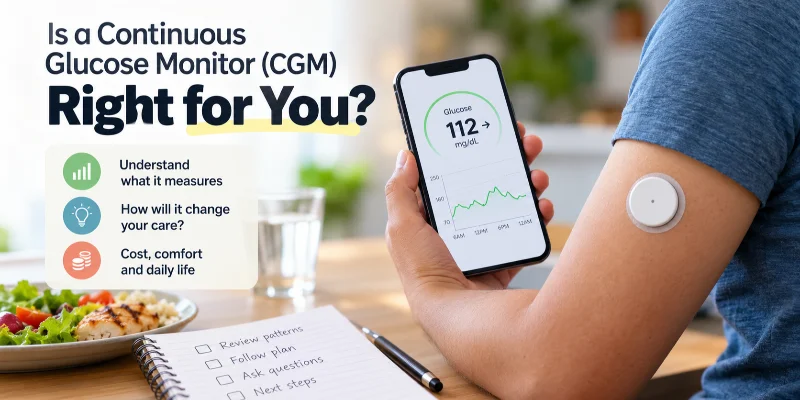

A continuous glucose monitor, or CGM, can provide information across the day and night that occasional finger-prick checks may miss. However, buying a sensor does not automatically make diabetes care simpler. The useful starting question is what you and your clinician hope to learn or manage differently. Repeated lows, unclear overnight patterns, and treatment decisions may create different reasons to consider CGM. Cost, phone compatibility, comfort, and the ability to act on information also matter. A device should support an agreed care plan rather than become another stream of numbers you feel obliged to watch constantly.
CGM systems estimate glucose using a sensor under the skin, generally measuring glucose in the fluid between cells. This differs from measuring glucose in a finger-prick blood sample. Readings may differ, particularly when glucose is changing quickly. Ask your clinician and follow the product instructions about when a meter check is needed, especially if symptoms do not match the sensor reading. Do not assume every device has identical rules. Learning what the system can and cannot tell you is part of using it safely.
Systems vary in wear duration, scanning needs, alerts, sharing options, and compatible phones or receivers. Check the exact product available to you, including whether an app works on your phone. Ask how replacement sensors are obtained and what support is available if one fails. Some systems can connect with insulin delivery technology, but that does not mean a standalone sensor automatically adjusts your treatment. Device features and approvals change, so confirm current instructions rather than relying on an old comparison chart or a friend's model.
Ask what question the trial or ongoing use will answer. A clinician may review overnight patterns, time spent below range, or responses to a treatment change. Agree on when data will be reviewed and what actions you should take independently. Trend arrows can be helpful, but they are not an invitation to repeatedly correct every movement. Insulin stacking or unplanned extra doses can be dangerous. Use only the dosing and response instructions taught for your treatment. If you do not understand an alert, ask before improvising a response.
Time in range is a summary of how much time glucose stays within an agreed interval. It is useful alongside other information, including lows and your overall circumstances. Targets are individualized and should not become a competition with online screenshots. A flat trace is not a requirement for normal living. Meals, activity, illness, and other factors can influence glucose. Ask your care team which patterns matter, what to record beside them, and which fluctuations do not need immediate action. A planned review can prevent attention from being captured by every small change.
Calculate recurring costs rather than only the starter price. Include sensors, any receiver, supplies, and appointments needed to interpret results. Ask whether short-term use could answer a specific question if continuous use is unaffordable. Discuss skin sensitivity, insertion worries, and the impact of alarms on sleep or work. Sharing readings with a relative should be your choice, with agreement about when they should contact you. Constant unsolicited messages about the trace can increase burden even when the intention is supportive.
An illustrative person might buy a CGM hoping to identify one forbidden food, then become anxious about every rise. A clearer plan would focus on a clinical question, such as whether unexplained overnight lows are occurring, and schedule a review. Another person may benefit from ongoing alerts while using insulin. The decision is personal. Ask what would make the device useful, what training is needed, and whether it improves safety or simply adds worry. Technology can support care, but it cannot replace interpretation, education, or access to treatment.
Write the main reason you are considering CGM and discuss it with your clinician. Check the exact product, compatibility, ongoing cost, and local support before buying. Ask for training on insertion, readings, alerts, meter confirmation, and data review. Agree on which actions you can take yourself and which require contact with the care team. If you try a device, record relevant events without reacting to every fluctuation. Notice skin comfort, sleep, workload, and whether the information answers the original question. Arrange the promised review and decide whether continued use is worthwhile. Keep a backup monitoring plan and the supplies your clinician recommends in case the sensor is unavailable or unreliable.
Write your plan in the language you use at home. A useful instruction should explain what to do, when to do it, and whom to contact when something goes wrong. Ask a clinician or educator to explain unfamiliar terms, then describe the instruction back in your own words. This helps uncover misunderstandings before they become problems.
Make room for practical limits. Work hours, caring responsibilities, mobility, money, and access to services all affect what is possible. Bring these details into the conversation rather than agreeing to a routine you cannot sustain. A smaller step that fits everyday life is often easier to repeat than an ambitious plan requiring ideal circumstances.
Ask for clarification whenever instructions seem confusing. Your observations matter during the next clinical conversation. Agree on a realistic follow-up date with your clinician. A familiar notebook can be as useful as a complicated app. Bring your questions to an appointment instead of relying on memory. Check that any written plan still matches your current prescription and circumstances. Share important changes promptly so your healthcare team can decide whether an earlier review is needed.
Usually it estimates glucose from fluid under the skin rather than a finger-prick blood sample. Differences can occur. Follow product and clinical instructions about confirming readings, particularly when symptoms and readings disagree.
A standalone CGM does not create a personalized treatment plan. Connected insulin systems have specific features and instructions. Medication adjustments still require the education and decision rules appropriate to your treatment.
No universal requirement applies to everyone. Potential benefit depends on treatment, clinical questions, access, and preferences. Ask whether it would meaningfully improve safety or decisions in your circumstances.
Some systems offer sharing, but features vary. Decide who can see it and what support you want. Agree on contact rules so sharing does not turn into constant supervision or alarming commentary.
Tell your clinician. Education, alert settings, a defined review schedule, or a different monitoring approach may help. The plan should support wellbeing as well as provide data, and device use can be reconsidered.
Choose CGM for a clear purpose, with training, an affordable supply plan, and agreed interpretation. Confirm current product details before purchasing. The most useful device is one that helps you and your care team make safer decisions while keeping the daily workload manageable.