
Home Blood Pressure Checks with Diabetes: Getting Readings You Can Trust
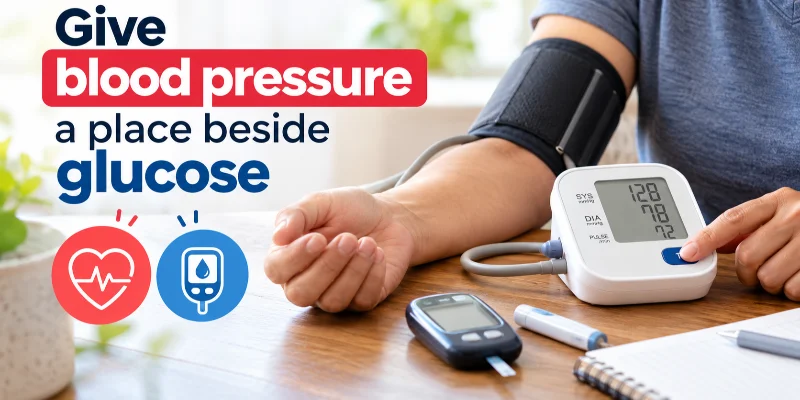

Diabetes care often focuses on glucose numbers while blood pressure gets checked only during appointments. Yet both belong in a plan for heart and kidney health. Home blood pressure monitoring can provide useful information when your clinician recommends it, particularly if clinic readings vary or treatment is being reviewed. Its value depends on the device, technique, and record, rather than the number of times you press the button. A calm, repeatable process helps your healthcare team interpret results. The goal is to collect trustworthy observations and know when to seek help, not to diagnose yourself from one surprising reading.
The American Heart Association recommends an automatic upper-arm cuff monitor for home use. A cuff that is too small or too large can affect readings, so check the manufacturer's arm-size range. Ask your clinician or pharmacist for help selecting a validated device rather than choosing only by price or advertising. Bring it to an appointment to compare technique and discuss its use. If you have an irregular heartbeat or another circumstance affecting measurement, ask whether the device is appropriate for you. Keep instructions and batteries available.
Phone apps and watches do not automatically replace a recommended cuff monitor. A device's appearance or popularity does not establish clinical accuracy. If money is limited, discuss options with your care team before buying unfamiliar equipment. Shared household equipment may be practical if the cuff fits each user and results remain clearly separated. Label each person's record. Do not change prescribed blood pressure medicine because a home monitor seems reassuring; treatment decisions consider your history and the overall pattern as well as individual readings.
Avoid smoking, caffeine, and exercise during the 30 minutes before a planned measurement, and empty your bladder first. Sit quietly for at least five minutes. Use a chair supporting your back, keep feet flat on the floor, and avoid crossing your legs. Place the cuff on bare skin and support your arm at heart level. Do not talk or scroll through stressful messages during measurement. These small details help make the result easier to interpret. Ask someone to observe your technique once if you are unsure about positioning.
Your clinician can specify when and how often to measure. A common technique is to take two readings one minute apart and record both, but the monitoring schedule should serve a clear purpose. Write the date, time, values, and relevant context, such as missed medicine or symptoms. Avoid taking repeated readings every few minutes until one looks acceptable. That approach can increase anxiety and obscure the pattern. A clear series collected as instructed is more useful than a long list selected according to which number you liked.
Ask your clinician to write your target range and contact instructions. Your age, kidney health, dizziness, and other conditions can affect treatment decisions. High blood pressure often has no obvious symptoms, so feeling well does not establish that a high reading is harmless. If a reading is unexpectedly elevated, check your technique and follow the agreed repeat-and-contact plan. Repeated results outside your range should be discussed. Do not take an extra tablet or borrow someone else's medicine to lower a number quickly.
A systolic reading above 180 or a diastolic reading above 120 mm Hg requires prompt attention. Repeat after at least one minute if you can do so safely. If it remains that high with chest pain, shortness of breath, weakness, vision change, or other concerning symptoms, seek emergency care immediately. Without symptoms, contact a healthcare professional urgently for guidance rather than ignoring the result. Similarly, dizziness or fainting with unusually low readings needs assessment. The plan should say what to do, not merely provide a target you are expected to interpret alone.
Check the model and cuff size of your monitor, then ask your care team whether home monitoring is appropriate and what schedule to use. Arrange a quiet chair and table where your arm can rest correctly. Practice the technique once without rushing. Keep a simple record for the period your clinician requests, including both readings when instructed and any symptoms. Bring the device and record to your review. Ask for a written target and separate instructions for urgent results. Discuss dizziness, medication costs, or difficulty using the cuff. At the end of the planned monitoring period, confirm whether checks should continue, become less frequent, or stop until another clinical question arises.
Write your plan in the language you use at home. A useful instruction should explain what to do, when to do it, and whom to contact when something goes wrong. Ask a clinician or educator to explain unfamiliar terms, then describe the instruction back in your own words. This helps uncover misunderstandings before they become problems.
Make room for practical limits. Work hours, caring responsibilities, mobility, money, and access to services all affect what is possible. Bring these details into the conversation rather than agreeing to a routine you cannot sustain. A smaller step that fits everyday life is often easier to repeat than an ambitious plan requiring ideal circumstances.
Keep written instructions accessible. Your observations matter during the next clinical conversation. Agree on a realistic follow-up date with your clinician. A familiar notebook can be as useful as a complicated app. Bring your questions to an appointment instead of relying on memory. If an approach feels unmanageable, explain the obstacle and ask for a simpler alternative. Share important changes promptly so your healthcare team can decide whether an earlier review is needed.
Setting, timing, technique, and other factors can affect readings. A properly collected home series may help your clinician understand the difference. Bring your device and record rather than assuming either setting is always correct.
Use the cuff on bare skin according to the device instructions. A sleeve or rolled clothing can interfere with fitting and positioning. Ask for a demonstration if you have difficulty placing the cuff.
Continue treatment as prescribed until your clinician advises otherwise. Improved readings may reflect that treatment is working. Abruptly stopping or taking medicine only when the number is high can create problems.
They are not automatically interchangeable with a validated upper-arm device. Positioning can be challenging. If an upper-arm cuff is unsuitable, ask your clinician which alternative and technique are appropriate.
Record date, time, symptoms, and relevant changes such as missed medicine. Keep the record concise and consistent. Your care team can explain which details are important for the question being investigated.
Trustworthy monitoring begins with a suitable device and a repeatable technique. Collect readings for an agreed purpose, share the full pattern, and keep clear action instructions nearby. Blood pressure care supports the wider diabetes plan when it leads to thoughtful clinical decisions rather than constant checking.