

Low Blood Sugar at Home: A Practical Hypoglycemia Preparedness Guide
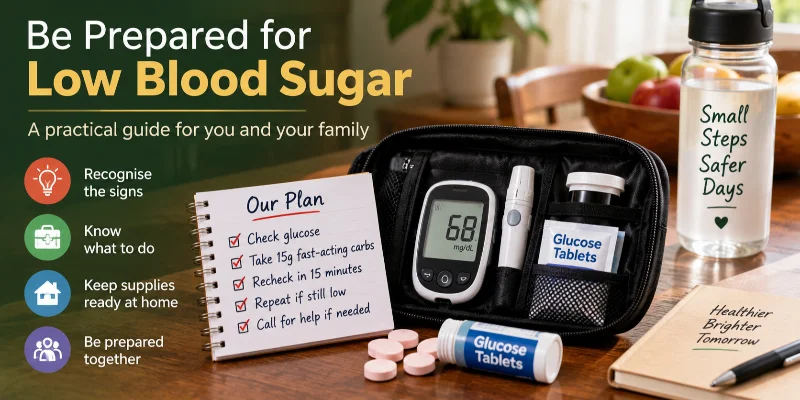

A diabetes plan should explain what to do when glucose falls as clearly as it explains high readings. Yet many households keep a meter and prescriptions without an agreed response to a low result. One person may offer a large meal, another may suggest resting, and a third may assume sweating is caused by the Kerala heat. Preparing before an episode helps everyone act more calmly. This guide focuses on organising the home, recognising situations that need attention, and discussing a personal response plan with your diabetes team.
Low blood glucose is particularly relevant for people using insulin or certain tablets, including sulfonylureas. For many adults with diabetes, a reading below 70 mg/dL is the action threshold. Shaking, sweating, hunger, dizziness, confusion, or unusual behaviour can occur, although some people have few warning symptoms. Ask your clinician which of your medicines can cause a low and what threshold applies to you. A treatment list is more useful when you understand the purpose and main risks of each item on it.
Do not assume that everyone in the family with diabetes needs the same precautions. A relative taking a different medicine may rarely experience low glucose, while someone using insulin may need a more detailed plan. Write the individual instructions beside the medicine list, using the language the household reads comfortably. If several people share a home, label each care folder clearly. Advice passed informally between relatives can otherwise become detached from the person for whom it was originally intended.
For an adult who is alert and able to swallow safely, a common approach is 15 grams of fast-acting carbohydrate, followed by another glucose check after 15 minutes. Repeat if still low, following the personal plan. Check product labels to identify the correct quantity of glucose tablets or gel. If someone is unconscious, having a seizure, or cannot swallow safely, give nothing by mouth. Seek emergency help and use prescribed glucagon if available and you have been taught how. These essentials are explained in the NIDDK hypoglycemia guide.
The household preparation around that response deserves its own attention. Keep the agreed treatment somewhere obvious rather than inside an unfamiliar drawer. Check it regularly and replace anything used. A small card can identify the treatment location, the emergency contact, and the person to call for clinical advice. Read the card together during a quiet moment. In a stressful situation, a simple arrangement that everyone understands is more helpful than several pages of information nobody has opened.
Consider keeping a dedicated pouch containing the meter, suitable strips, the agreed fast-acting carbohydrate, and a copy of the written plan. If you use a sensor, ask your team when a meter check is needed, especially when symptoms and the displayed result disagree. Keep instructions for the equipment with the kit. Practise finding the supplies without assistance, including in the evening when lighting may be poor. A kit should be convenient for the person who needs it, not merely tidy on a high shelf.
Create a second checklist for leaving home. A short walk to a shop can turn into a longer outing, and a hospital visit can involve unexpected waiting. Decide which supplies travel with you and which remain at home. A family member can help check the bag initially, but the routine should preserve independence wherever possible. The goal is to make preparation ordinary, like carrying keys, rather than something that signals danger every time the person leaves the house.
Once the episode has been treated and the person is safe, record what happened. Useful details include the time, glucose result, symptoms, recent meal, medicine timing, activity, treatment taken, and the follow-up reading. A brief factual account is enough. Avoid turning the record into an investigation about who made a mistake. People are more likely to share problems when the conversation is practical and respectful. The record exists to support a safer treatment review, not to assign blame.
Imagine a person who repeatedly feels unwell during a delayed afternoon meal. Writing only "low sugar again" leaves important gaps. A note that lunch was two hours late because of an appointment gives the care team something concrete to discuss. Similarly, an unusually active day, poor appetite, or a recent prescription change may matter. These examples are prompts for observation, not explanations that can be confirmed at home. The clinician should assess the pattern and decide whether treatment needs changing.
If an older parent stays with relatives, send the plan along with the medicines. Do not assume the host knows the usual routine. Identify who will keep the supplies accessible and who can make a call if help is needed. Explain that treatment instructions should not be replaced by a neighbour's preferred remedy. Families can agree on a calm sentence such as, "Let us follow the written plan first." This keeps the response focused without requiring an argument during an episode.
Respect the person's privacy when discussing the plan. They may want a spouse and one trusted neighbour to know, rather than every visitor. Ask whom they are comfortable involving. Where a person needs assistance with reading or using equipment, practise the relevant steps with that helper. A large-print card or a short note in Malayalam may be easier to use than an English leaflet. The best format is the one the intended reader can actually understand under pressure.
Repeated lows, episodes during sleep, or reduced ability to notice symptoms need clinical review. Even an episode that resolves at home can reveal a mismatch between treatment and current needs. Do not deliberately keep glucose high or independently stop prescribed treatment as a long-term solution. Discuss the concern directly and ask for a safer plan. The NIDDK diabetes management overview explains why ongoing low readings should be discussed with the care team.
Prepare three questions for that appointment: What may have contributed to these episodes? What should change in the written plan? When should we seek urgent help instead of continuing home treatment? Bring the actual meter or sensor records if available. If a family member witnessed the episode, their observations may help, with the patient's agreement. Ask for any revised instructions in writing so that the information reaching the rest of the household is accurate and consistent.
A frightening low can leave someone anxious about sleeping, travelling, or being alone. That reaction deserves a conversation. Rather than promising that an episode can never happen again, identify the practical supports that are now in place: accessible supplies, a clear response, a contact route, and a treatment review. Ask what still feels difficult. Sometimes the remaining barrier is not medical terminology but uncertainty about calling for help, disturbing a family member, or being judged for an unexpected reading.
For families in Kannur, the next useful step is a personalised discussion rather than collecting more conflicting advice. Bring your current prescription and episode notes when arranging a review through the Glycemia contact page. Ask the treating team to confirm the action threshold, treatment quantities, monitoring instructions, and emergency response suitable for you. A clear household plan helps turn general awareness into something usable, giving both the person with diabetes and their supporters a more confident way to respond.