
Type 2 Diabetes Remission vs. Management: Why Addressing the Root Cause is the Only Permanent Solution
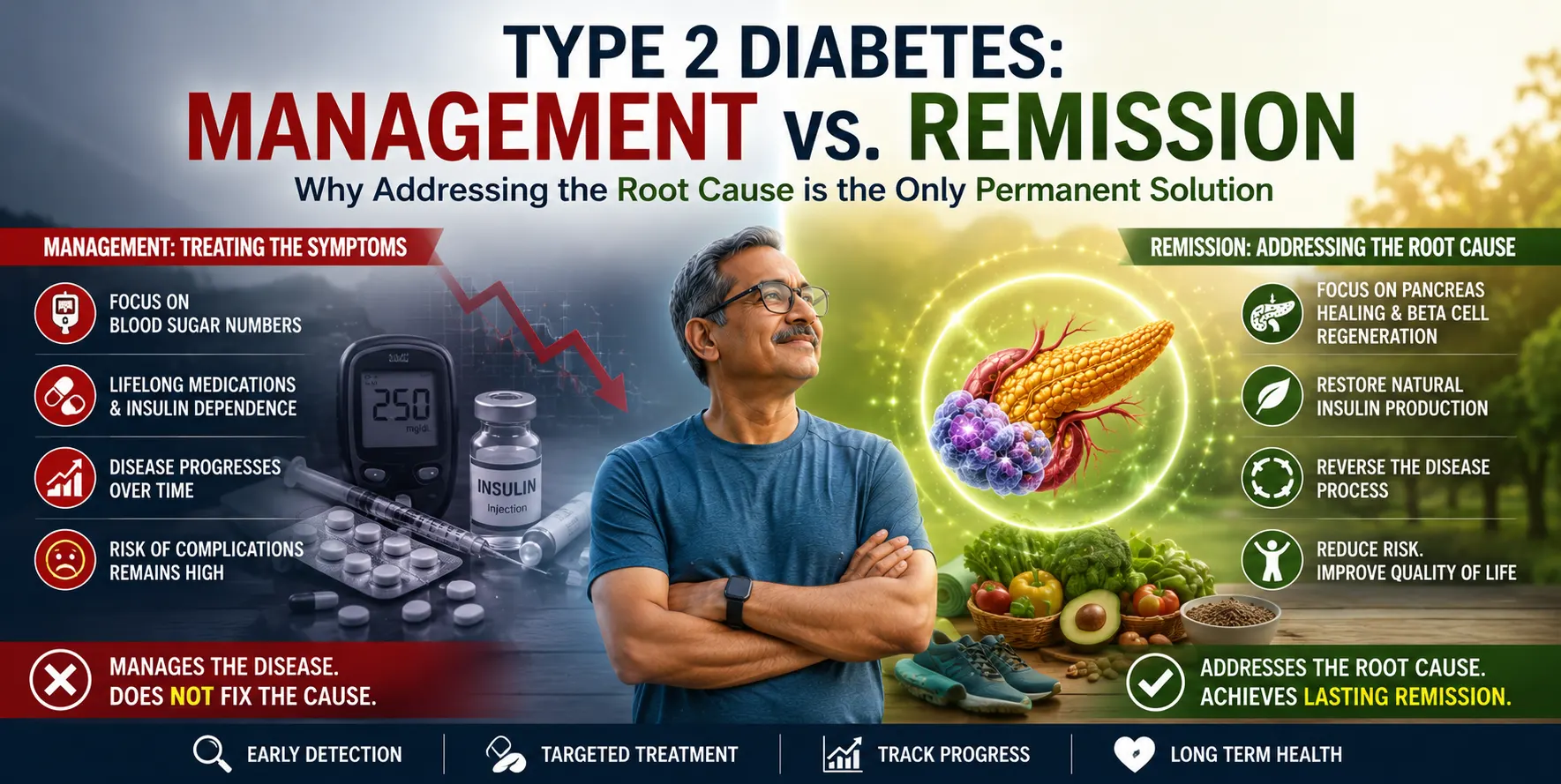

For generations, the standard medical approach to type 2 diabetes has been focused entirely on one word: management. When a patient is diagnosed, they are typically told that diabetes is a progressive, lifelong condition that they must learn to live with. The primary goal of standard treatment is to manage the disease by keeping blood glucose levels within a safe range, primarily through oral medications and, as the disease progresses, daily insulin injections. While managing blood sugar is critical for preventing immediate emergencies, this approach does not address the underlying disease process. In fact, many standard treatments act as temporary band-aids; they lower blood sugar levels in the short term, but they do nothing to stop the gradual decline of the insulin-producing beta cells in the pancreas. As a result, patients on management protocols often find their medication dosages steadily increasing over time, while the threat of long-term complications remains.
In recent years, a new goal has emerged in modern endocrinology: diabetes remission. Remission is defined as the state where blood glucose levels return to a normal range (an HbA1c below 6.5%) and remain there for at least three months without the need for any active diabetes medications. Unlike simple management, which keeps the disease under control using external drugs, remission indicates that the body has recovered its natural ability to regulate glucose. Achieving sustainable remission requires a shift in focus from the symptoms (high blood sugar) to the root cause (pancreatic beta cell dysfunction). At the Glycemia Anti-Diabetic Clinic, the treatment protocol is designed to achieve true, long-term remission by focusing on beta cell regeneration. By helping the pancreas heal and recover its natural insulin-producing capacity, patients can break free from the cycle of daily medications. This article will explore the differences between diabetes management and remission, examine why management often fails in the long run, and explain how addressing the root cause can lead to a permanent solution.
To understand why a new approach is needed, we must look at how traditional diabetes management works. When blood glucose levels rise, doctors typically prescribe medications that work through various mechanisms to lower the numbers on the screen. For example, Metformin reduces glucose production in the liver and increases insulin sensitivity in the muscles. Sulfonylureas (such as glimepiride or gliclazide) work by stimulating the beta cells in the pancreas to secrete more insulin, regardless of the body's actual needs. SGLT2 inhibitors block glucose reabsorption in the kidneys, forcing the body to excrete excess sugar in the urine. While these drugs are effective at lowering blood sugar, they do not cure the underlying cellular dysfunction. In fact, some of these medications can accelerate the progression of the disease. Sulfonylureas, for instance, force already exhausted and stressed beta cells to work even harder, which can lead to rapid cell exhaustion and permanent cell death (apoptosis) over time.
This explains why the traditional management model is often progressive. A patient might start with a single Metformin tablet, but within a few years, they may require a combination of two or three oral drugs. Eventually, as their beta cell mass continues to decline, these oral medications lose their effectiveness, and the patient must transition to daily insulin injections. This progressive decline is not a natural feature of the disease; rather, it is a consequence of treating the symptom of high blood sugar without addressing the underlying damage to the pancreas. Furthermore, chronic high levels of insulin (both from the pancreas and from external injections) promote fat storage and weight gain, which worsens insulin resistance and increases the risk of cardiovascular complications. To achieve a permanent solution, we must move away from therapies that force the pancreas to work harder and focus on therapies that help the pancreas heal and regenerate.
Diabetes remission is a state of metabolic restoration that offers a profound contrast to lifelong management. In medical terminology, remission is used instead of a "cure" because the genetic and environmental factors that initially triggered the diabetes are still present; if a patient returns to an unhealthy lifestyle, the condition can return. However, as long as the patient maintains their metabolic health, they can live completely free from diabetes medications and the fear of complications. Remission is not just about having normal blood sugar numbers; it is about restoring the underlying biological structures that regulate metabolism. This means reducing systemic inflammation, clearing ectopic fat from the liver and pancreas, and most importantly, restoring a functional mass of insulin-producing beta cells. Without a sufficient number of healthy beta cells, the body cannot produce enough insulin to manage glucose loads naturally, and long-term remission is impossible.
The key to sustainable remission lies in early and targeted intervention. When a patient is diagnosed with prediabetes or early-stage type 2 diabetes, a significant portion of their beta cells are dormant rather than dead. If we intervene early with therapies designed to protect and regenerate these cells, we can reverse the disease process and achieve remission relatively quickly. Even for patients who have had diabetes for many years and are on high insulin doses, recovery is still possible. By utilizing advanced diagnostics to assess the state of the pancreas and applying targeted cellular therapies, we can stimulate the regeneration of remaining beta cells and help patients safely de-escalate their medication doses. This is the core mission of Glycemia Anti-Diabetic Clinic Pvt Ltd in Kannur, Kerala.
The idea of type 2 diabetes remission is not merely a theoretical hypothesis; it is backed by major international clinical trials. For example, the landmark Diabetes Remission Clinical Trial (DiRECT) published in The Lancet demonstrated that a significant percentage of patients with type 2 diabetes could achieve drug-free remission through intensive metabolic and weight-loss interventions. This study shook the medical community by proving that the pancreatic damage associated with type 2 diabetes is not entirely permanent, and that the disease can indeed be put into remission. However, while trials like DiRECT relied primarily on extreme caloric restriction, Glycemia Anti-Diabetic Clinic takes this science a step further. By combining metabolic optimization with advanced natural therapies that target beta cell regeneration directly, the clinic helps patients achieve remission that is more sustainable and less reliant on severe, long-term dietary deprivation.
This represents a major shift from the historical model of diabetes treatment. In the early 20th century, before the discovery of insulin and modern oral medications, diabetes was managed primarily through strict dietary restriction. When synthetic drugs and insulin were introduced, the focus shifted entirely to pharmaceutical management, allowing patients to eat whatever they wanted as long as they took their medications. While this was a life-saving advancement for type 1 diabetics, it led to a culture of complacency in type 2 diabetes care, where the underlying disease process was ignored in favor of quick drug-based fixes. Today, we are seeing a return to a more holistic, root-cause approach, but with the added benefit of modern scientific research and diagnostic tools. By understanding the cellular mechanisms of beta cell recovery, we can now offer patients a targeted pathway to true remission rather than lifelong drug management.
At Glycemia Anti-Diabetic Clinic, the journey to remission is guided by a scientifically validated, multi-faceted protocol. Rather than relying on synthetic drugs that mask symptoms, the clinic uses specialized natural formulations and natural supplements designed to support the body's natural healing mechanisms. These formulations work at a cellular level to clear metabolic toxins, reduce chronic inflammation in the pancreas, and stimulate the regeneration of dormant beta cells. The safety and efficacy of these natural therapies have been validated through collaborations with leading scientific institutions. The Amala Cancer Research Center in Thrissur, a premier laboratory approved by the Indian Council of Medical Research (ICMR) and the Council of Scientific and Industrial Research (CSIR), has evaluated the clinic's natural formulations, confirming their safety and regenerative properties. This scientific backing provides patients with the assurance that their recovery is built on a solid foundation of evidence-based medicine.
To support this cellular healing, patients are guided through comprehensive lifestyle modifications. The clinic's team of nutritionists and medical experts helps patients adopt a whole-food, low-glycemic diet that reduces metabolic stress and supplies the essential micronutrients required for cellular repair. Patients also receive personalized guidance on exercise and stress management, which help improve insulin sensitivity and protect the newly regenerated beta cells. By combining these lifestyle adjustments with the clinic's advanced regenerative treatments and utilizing their advanced diagnostic screening technology, patients can achieve sustainable, long-term remission. If you are ready to stop managing symptoms and start healing the root cause of your diabetes, contact Glycemia Anti-Diabetic Clinic in Kannur today to begin your journey to a medicine-free life.