

Can Damaged Beta Cells Actually “Wake Up”? The Science of Rejuvenation
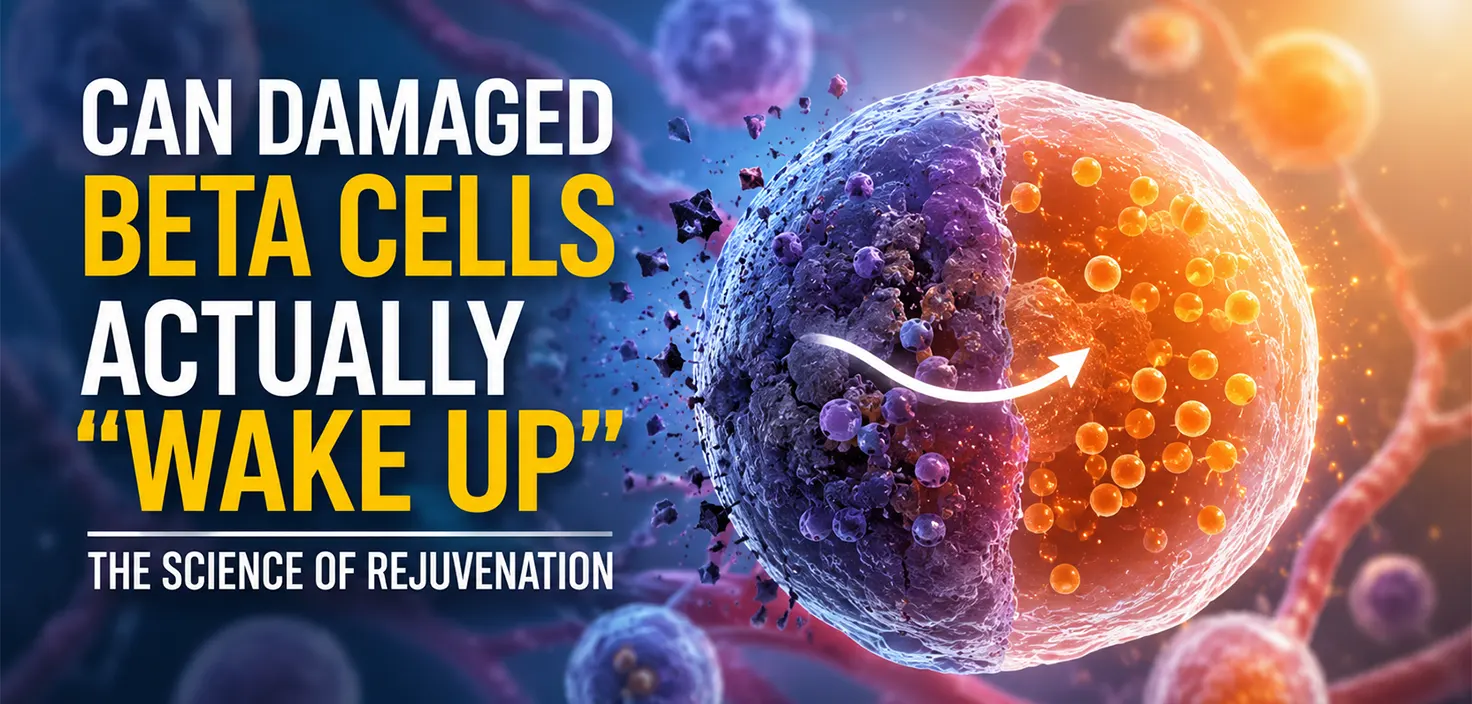

For many years, the story of diabetes was explained in a simple way: the insulin-producing cells of the pancreas become damaged or destroyed, insulin levels fall, and blood glucose rises.
But modern research is showing that the full picture may be more complicated.
Some pancreatic beta cells may be permanently lost. Others may still be alive but unable to work properly. Under prolonged metabolic stress, certain beta cells can become exhausted, dysfunctional, or lose some of the characteristics that allow them to respond normally to glucose.
This has created an important area of diabetes research: Can some damaged beta cells recover their function?
The short answer is that, in some situations, beta-cell function can improve. Researchers are studying several biological processes that may contribute to this improvement, including reducing cellular stress, reversing glucotoxicity, restoring beta-cell identity, protecting remaining cells, and developing ways to replace lost cells.
However, the science differs greatly between Type 1 and Type 2 diabetes, and improving the function of surviving cells is not the same as bringing dead cells back to life.
Let us understand the science in a simple way.
Beta cells are specialised cells located in small groups of pancreatic cells called the islets of Langerhans.
Their main job is to produce and release insulin.
When we eat carbohydrates, they are broken down into glucose. Glucose enters the bloodstream and the blood glucose level rises. Healthy beta cells detect this change and release insulin.
Insulin then helps glucose move from the bloodstream into cells, where it can be used for energy or stored for later use.
A simple way to imagine this system is:
Food increases blood glucose.
Beta cells detect the increase.
The pancreas releases insulin.
Insulin helps the body use or store glucose.
Blood glucose returns toward its normal range.
When beta cells cannot produce enough insulin for the body's needs, blood glucose can remain elevated.
In Type 1 diabetes, the immune system attacks insulin-producing beta cells. In Type 2 diabetes, insulin resistance and progressive beta-cell dysfunction are major parts of the disease process. (NIDDK)
No. This distinction is one of the most interesting areas of modern diabetes research.
A beta cell can exist in different functional states. It may be:
Healthy and producing insulin normally
Alive but under severe metabolic stress
Producing less insulin than required
Poorly responsive to changes in blood glucose
Dedifferentiated, meaning it has lost some features of a mature beta cell
Permanently damaged or dead
This is why the phrase “waking up beta cells” can be useful as a simple explanation, but it should not be taken literally.
Scientists do not generally describe beta cells as sleeping. Instead, they study beta-cell dysfunction, exhaustion, stress, dedifferentiation, redifferentiation, survival, proliferation, and regeneration.
The important idea is that a living but poorly functioning cell may have a possibility of functional recovery that a dead cell does not.
Research into beta-cell dedifferentiation has explored whether some cells that have lost their mature identity can, under suitable conditions, regain beta-cell characteristics and improve their function. This remains an active and developing area of research. (Nature)
Imagine a factory that produces insulin.
If the factory is completely demolished, simply reducing its workload will not rebuild it.
But imagine another factory where:
The workers are exhausted
The machines are overloaded
The power supply is unstable
Raw materials are arriving too quickly
The production system is no longer working efficiently
That factory still exists. If the stress is reduced and the working environment improves, some production capacity may return.
Beta-cell dysfunction can sometimes be understood through a similar example.
In diabetes, especially Type 2 diabetes, beta cells may be exposed to a difficult metabolic environment. They may be forced to produce increasing amounts of insulin to compensate for insulin resistance. Persistent high glucose and other metabolic stresses can further impair their ability to function normally.
This creates a harmful cycle:
Insulin resistance → increased beta-cell workload → beta-cell stress → reduced insulin secretion → higher glucose → further beta-cell stress.
Researchers are interested in finding ways to interrupt this cycle.
Glucose is essential for life. But persistent high blood glucose can contribute to cellular dysfunction.
The term glucotoxicity is used to describe the harmful effects that prolonged high glucose exposure can have on cells, including pancreatic beta cells.
Under chronic metabolic stress, beta cells may become less effective at:
Detecting changes in glucose
Producing insulin
Processing insulin correctly
Releasing insulin at the right time
Maintaining normal cellular identity
Research has shown that reducing severe hyperglycaemia can sometimes be associated with partial recovery of beta-cell function, particularly in some people with Type 2 diabetes. (Diabetes Journals)
This does not mean that lowering blood glucose automatically regenerates all lost beta cells. It means that reducing an unhealthy metabolic environment may allow some surviving cells to function better.
One of the most fascinating ideas in beta-cell research is dedifferentiation.
A mature beta cell has a specialised identity. It contains the cellular machinery and genetic programming needed to detect glucose and produce insulin appropriately.
Under severe or prolonged stress, researchers have observed that some beta cells can lose parts of this specialised identity. Instead of immediately dying, they may enter a less specialised and poorly functioning state.
Think of an experienced chef who still works in the kitchen but has stopped performing the specialised role they were trained to do. The person is still present, but the expected function has been lost.
Scientists are investigating whether some dedifferentiated beta cells can undergo redifferentiation, meaning they regain mature beta-cell characteristics and function.
Experimental and review literature suggests that beta-cell identity may be a therapeutic target, particularly in Type 2 diabetes, but many questions remain about how these processes work in humans and how they can be safely targeted. (PMC)
In certain situations, yes, beta-cell function can improve.
However, the degree of improvement varies from person to person and depends on factors such as:
Type of diabetes
Duration of diabetes
Remaining functional beta-cell mass
Severity of insulin resistance
Blood glucose control
Body weight and metabolic health
Genetics
Age
Other health conditions
The underlying cause of beta-cell damage
Research has reported improvement in beta-cell function after reducing metabolic stress in some people with Type 2 diabetes. Early and intensive treatment has also been studied for its potential role in preserving or improving beta-cell function. (Diabetes Journals)
The key word here is function.
An improvement in insulin secretion does not necessarily prove that new beta cells have been created. It may result from surviving cells working better, reduced glucotoxicity, improved insulin sensitivity, changes in beta-cell identity, or a combination of several mechanisms.
Scientists are exploring several different strategies.
One approach is to reduce the conditions that place excessive stress on beta cells.
The goal is to preserve the cells that are still alive and functioning.
Researchers are studying whether cells affected by metabolic stress can recover part of their normal ability to detect glucose and release insulin.
This is one of the areas most closely related to the idea of beta cells “waking up.”
If some beta cells have lost their mature identity rather than died, researchers want to understand whether they can be guided back toward a functional beta-cell state.
Much of this work remains experimental.
Another research goal is to increase the number of functional beta cells.
Possible approaches being investigated include stimulating beta-cell replication and studying whether other pancreatic cell types can be reprogrammed into insulin-producing cells.
For example, laboratory and animal research has investigated the possibility of converting pancreatic alpha cells into beta-like insulin-producing cells. Such work is scientifically promising, but animal research does not automatically translate into an available treatment for humans. (NIDDK)
Researchers are also working on cell replacement approaches, including pancreatic islet transplantation and stem-cell-derived insulin-producing cells.
Islet transplantation can provide functioning beta cells in selected situations, particularly for certain people with difficult-to-manage Type 1 diabetes, but it is a specialised medical procedure and has significant limitations. (NIDDK)
It is important not to treat all forms of diabetes as biologically identical.
In Type 1 diabetes, the immune system attacks insulin-producing beta cells.
Therefore, even if scientists successfully replace beta cells or restore the function of surviving cells, the autoimmune process must also be considered. Protecting newly functioning cells from immune attack is a major challenge in Type 1 diabetes research.
In Type 2 diabetes, the situation is different.
The body usually develops insulin resistance, meaning cells do not respond effectively to insulin. The pancreas initially tries to compensate by producing more insulin. Over time, beta-cell function may decline and the available insulin may no longer be sufficient for the body's needs.
Because some beta cells may remain alive but dysfunctional, Type 2 diabetes research has strong interest in beta-cell preservation and functional recovery.
The most important practical message is that beta-cell health is not always a simple question of “alive or dead.”
There is a spectrum of beta-cell states and several mechanisms may be involved in reduced insulin production.
For a person with diabetes, this means treatment decisions should be based on proper medical evaluation rather than assumptions about beta-cell regeneration.
Depending on the individual, a healthcare professional may assess factors such as:
Fasting and post-meal blood glucose
HbA1c
Duration and type of diabetes
Current medication or insulin use
Signs of insulin resistance
Body weight and waist measurement
Kidney and liver health
C-peptide testing in selected situations
Autoantibody testing when the type of diabetes is uncertain
A treatment approach should be individualised. No person should stop insulin or diabetes medication based on a claim that beta cells have regenerated without appropriate medical supervision and objective clinical evidence.
The future of diabetes research is moving beyond the simple goal of lowering a glucose number.
Researchers are asking deeper questions:
Can surviving beta cells be protected?
Can stressed cells recover?
Can beta-cell identity be restored?
Can the pancreas produce more functional beta cells?
Can insulin-producing cells be created from stem cells?
Can replacement cells be protected from immune attack?
These questions are leading to exciting research in cell biology, immunology, genetics, metabolic medicine, and regenerative medicine.
The scientific evidence so far gives reason for careful optimism. Beta-cell dysfunction can be partly reversible in some contexts, particularly when living cells are present and metabolic stress can be reduced. At the same time, complete restoration of lost beta-cell mass remains a major scientific challenge, and experimental findings should not be confused with universally proven clinical cures.
So, can damaged beta cells actually “wake up”?
The scientifically accurate answer is: some living but dysfunctional beta cells may recover part of their function under certain conditions, while dead cells cannot simply be revived.
The growing understanding of glucotoxicity, beta-cell stress, dedifferentiation, redifferentiation, cell protection, regeneration, and replacement is changing how researchers think about diabetes.
Rather than viewing beta-cell failure as one single irreversible event, science is revealing a more complex process. Some cells are lost, some become dysfunctional, and some may retain the potential for functional improvement.
The next generation of diabetes research is focused not only on controlling blood glucose, but also on understanding how to preserve, protect, restore, and potentially replace the cells responsible for producing insulin.
For people living with diabetes, this research represents an important area of scientific progress. The best approach today remains careful medical assessment, evidence-based diabetes management, regular monitoring, and informed discussion with qualified healthcare professionals.
No. A beta cell that has undergone irreversible cell death cannot simply wake up again. Research instead focuses on improving the function of surviving cells, encouraging the formation of new functional cells, reprogramming other cells, or replacing lost beta cells.
Some beta cells that are alive but dysfunctional may improve their function under certain conditions. The amount of recovery varies considerably between individuals and depends on the type and duration of diabetes and the remaining beta-cell capacity.
Beta-cell dedifferentiation is a process in which a mature beta cell loses some of the specialised characteristics required for normal insulin production and glucose response. Scientists are studying whether this process can be reversed.
No universal beta-cell regeneration cure for diabetes has been established. Beta-cell restoration, regeneration, reprogramming, stem-cell therapies, and cell replacement are active areas of research. Some approaches are experimental or available only in highly specialised medical settings.
Doctors may use several clinical factors and, when appropriate, tests such as C-peptide to estimate the body's own insulin production. The result should be interpreted by a qualified healthcare professional because medication use, glucose levels, kidney function, and the type of diabetes can affect interpretation.