

Can the Body Produce Insulin Naturally Again?
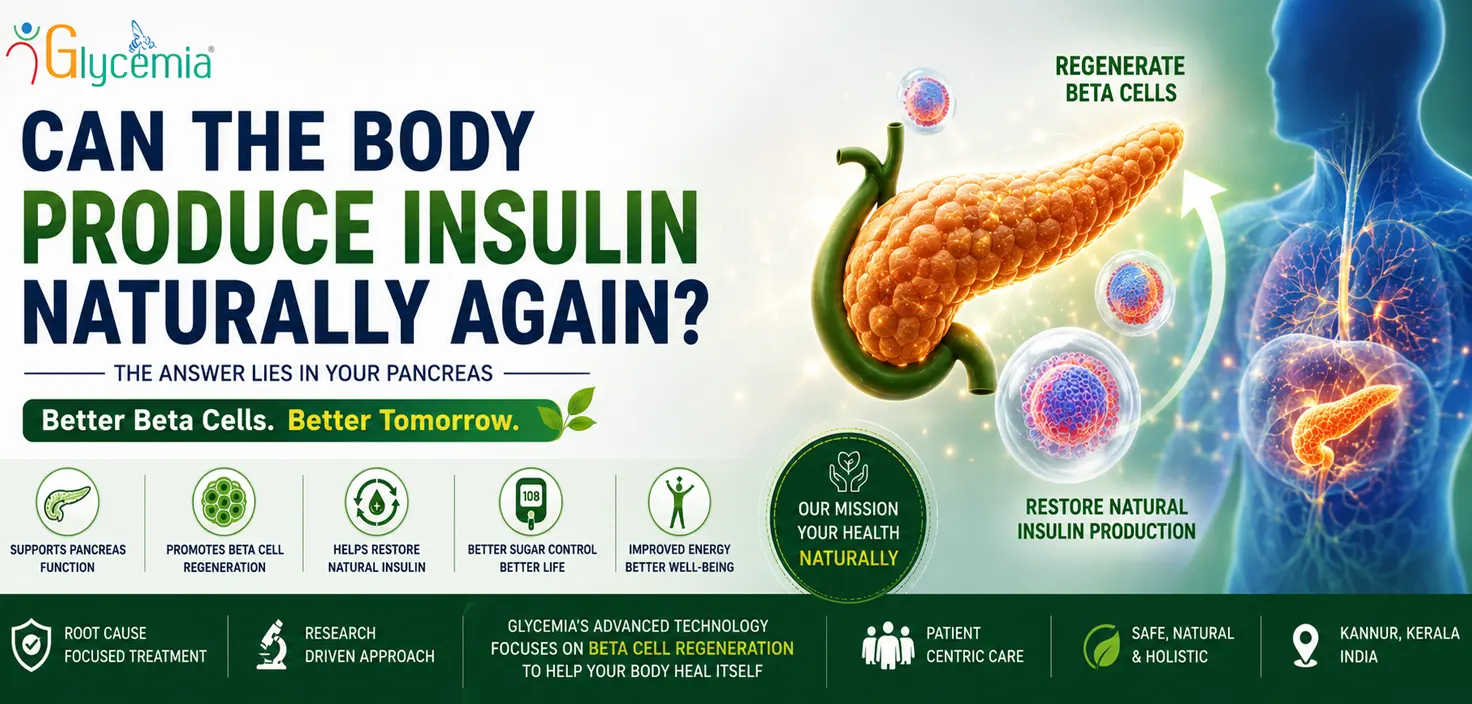

For millions of diabetic patients around the world, one question continues to create hope, curiosity, and debate:
Can the body produce insulin naturally again?
For many years, diabetes has been treated mainly as a lifelong condition that requires constant management. Patients are often told to focus on controlling blood sugar levels through medication, insulin injections, strict diets, and lifestyle changes. While these methods may help manage glucose levels, many people still wonder:
“What is actually happening inside the body?”
“Why did insulin reduce in the first place?”
“Can the body recover its natural insulin production again?”
At Glycemia Anti Diabetic Clinic, these questions have been at the center of years of research and treatment development. Our approach focuses not only on managing blood glucose levels, but also on understanding the root cause of diabetes and the role of beta cell regeneration.
To understand whether the body can naturally produce insulin again, we first need to understand how diabetes develops inside the body.
Insulin is one of the most important hormones in the human body.
It is produced by special cells called beta cells, located inside the pancreas gland.
The main job of insulin is to help glucose move from the bloodstream into the body’s cells, where it is used as energy.
Without enough insulin:
This is why insulin plays such a critical role in maintaining health.
Most people think diabetes simply means:
“Too much sugar in the blood.”
But high blood sugar is actually a symptom of a deeper internal problem.
In many diabetic patients, the body is unable to produce sufficient insulin because the beta cells inside the pancreas become damaged, weakened, or destroyed over time.
This means the real question should not only be:
“How do we reduce blood sugar?”
But also:
“Why did insulin production reduce?”
This shift in thinking is extremely important.
At Glycemia Anti Diabetic Clinic, we believe diabetes treatment should focus on understanding the underlying cause of reduced insulin production, not just controlling glucose numbers alone.
The pancreas contains clusters of beta cells responsible for insulin production.
In diabetic patients:
Over time, this can lead to:
For many years, it was believed that damaged beta cells could not recover. This belief shaped diabetes treatment across the world.
However, growing research in diabetes science has increased interest in beta cell regeneration and pancreatic recovery.
This is one of the most exciting questions in diabetes research today.
Researchers worldwide continue exploring whether damaged beta cells can regenerate, recover, or improve their function under the right conditions.
At Glycemia Anti Diabetic Clinic, our treatment philosophy is centered around this very concept — supporting the regeneration of destroyed beta cells to help the body naturally regulate insulin production again.
According to our research and treatment approach, when beta cell function improves, the body may gradually regain its ability to produce insulin more naturally.
This is why beta cell regeneration has become such an important area of hope in diabetes management.
Most conventional diabetes treatments focus mainly on:
These methods may help control glucose levels effectively for many patients. However, in many cases, the underlying issue involving beta cell damage remains unaddressed.
This is similar to treating fever without understanding the infection causing it.
At Glycemia, we often explain diabetes using a simple comparison:
Fever is not a disease itself. It is a symptom that something is wrong inside the body. Once the root cause is treated, the fever usually disappears.
Similarly, high blood sugar is often a symptom of deeper problems involving insulin production and pancreatic health.
For more than a decade, Glycemia Anti Diabetic Clinic in Kannur, Kerala has been focusing on research and treatment methods related to beta cell regeneration.
Our goal is not simply to suppress symptoms temporarily, but to support the body’s natural mechanisms involved in insulin regulation.
Our treatment philosophy focuses on:
According to our clinic’s research and experience, helping the body restore healthier beta cell activity may gradually improve glucose regulation naturally.
Even the most advanced treatment approaches cannot ignore lifestyle factors.
Modern lifestyle habits place enormous stress on the pancreas and insulin system.
Common factors affecting insulin health include:
These habits slowly increase metabolic stress and insulin resistance.
This is why many younger people today are developing diabetes much earlier than previous generations.
In many cases, healthier habits can help support better insulin sensitivity and metabolic health.
Positive changes may include:
The body has remarkable healing and recovery abilities when given the right support.
However, every diabetic patient is different. Factors such as age, duration of diabetes, lifestyle, pancreatic condition, and overall health can influence results.
One major mistake many people make is delaying action.
By the time severe symptoms appear, the body may already be under years of metabolic stress.
Early warning signs often include:
Ignoring these signs allows further stress on beta cells and insulin production.
The earlier a person focuses on improving metabolic health, the better the chances of protecting pancreatic function.
Yes, there are important differences.
In Type 1 diabetes, the immune system attacks beta cells, resulting in severe insulin deficiency.
In Type 2 diabetes, the body often develops insulin resistance first, followed by reduced insulin production over time.
Both conditions involve problems related to beta cells and insulin production, although the mechanisms differ.
This is why research into beta cell regeneration has become important for both forms of diabetes.
The possibility of helping the body naturally restore insulin production represents a major shift in diabetes science.
If beta cells can be regenerated or supported effectively:
This is why researchers around the world continue investigating pancreatic regeneration technologies and beta cell recovery.
At Glycemia Anti Diabetic Clinic, beta cell regeneration remains a central focus of our treatment philosophy and ongoing work.
Diabetes affects not only the body, but also emotions, confidence, and family life.
Many patients feel trapped in an endless cycle of:
This is why the idea of restoring natural insulin production gives hope to so many people.
The goal is not just longer life, but better quality of life.
Modern diabetes understanding is slowly evolving from symptom control toward deeper research into pancreatic health, insulin production, and beta cell regeneration.
So, can the body produce insulin naturally again?
Research and emerging treatment approaches suggest that supporting pancreatic health and beta cell regeneration may play an important role in the future of diabetes management.
At Glycemia Anti Diabetic Clinic, our mission is to focus on the root cause of diabetes by supporting beta cell regeneration and natural insulin regulation. Our treatment philosophy is based on years of research aimed at helping diabetic patients move toward healthier metabolic function and improved quality of life.
The body is far more powerful than many people realize.
With proper guidance, healthier lifestyle choices, scientific understanding, and advanced treatment approaches, the future of diabetes management may become very different from what the world once believed.