

Why Glycemia Anti Diabetic Clinic’s Beta Cell Regeneration Approach Is a New Direction in Diabetes Care
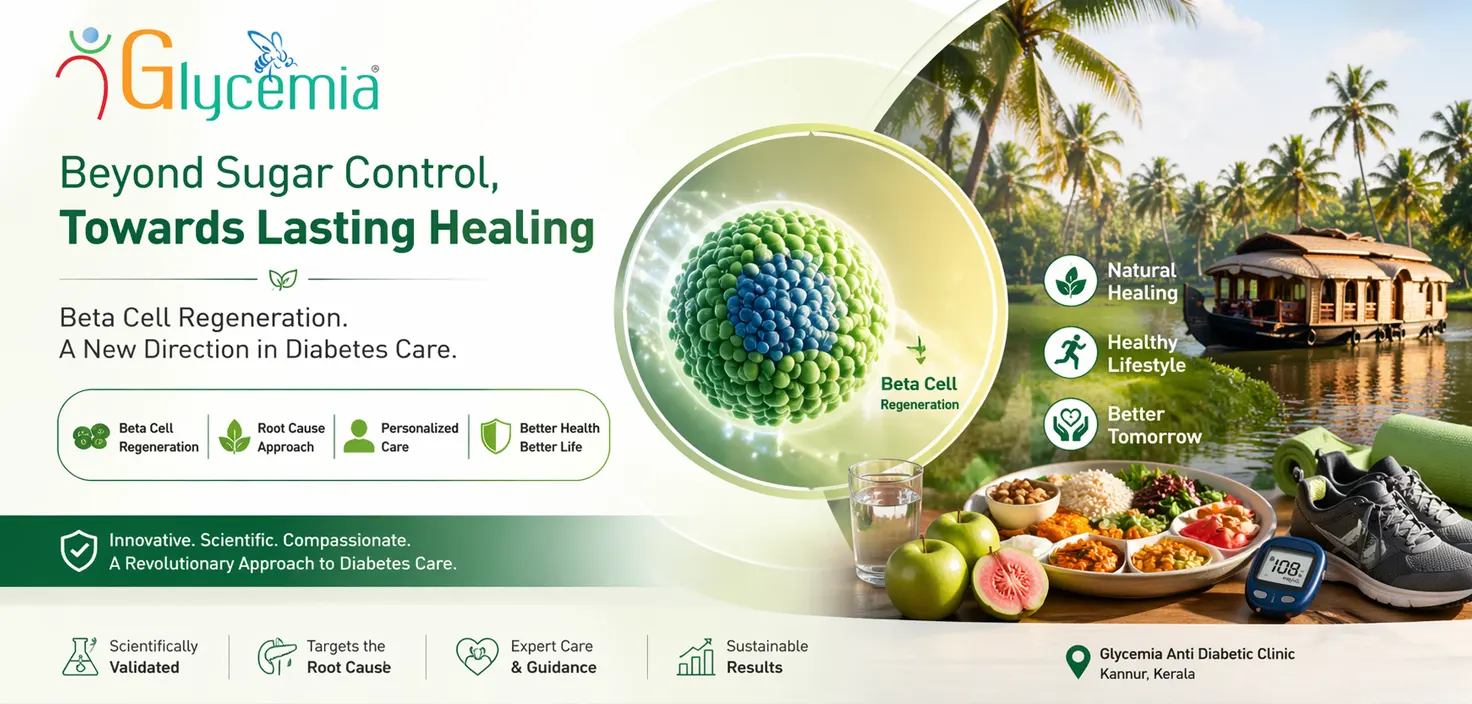

Diabetes management has traditionally focused on controlling blood sugar levels through medications, insulin therapy, and dietary restrictions. While these methods are effective in preventing complications, they often do not address the root cause of the disease. In recent years, a new concept has been gaining attention in medical research—beta cell regeneration. This approach aims to restore the body’s ability to produce insulin naturally.
In Kerala, Glycemia Anti Diabetic Clinic has positioned itself around this concept, offering a treatment philosophy that focuses not just on managing diabetes but on addressing its underlying mechanisms. This blog explores why this approach is considered innovative, how it aligns with scientific understanding, and why it may offer a promising path for individuals living with diabetes.
To understand why beta cell regeneration matters, it is important to first understand what causes diabetes.
The pancreas contains specialized cells known as beta cells, which produce insulin—a hormone essential for regulating blood sugar. In both Type 1 and Type 2 diabetes, these beta cells are either destroyed or become dysfunctional. This leads to insufficient insulin production and elevated blood glucose levels.
Traditional treatments primarily focus on:
While these approaches help manage symptoms, they do not restore damaged beta cells.
Beta cell regeneration refers to the process of creating new insulin-producing cells in the pancreas. Scientists have identified that the human body has some natural ability to regenerate beta cells under certain conditions.
Research suggests that:
However, translating this concept into practical treatment has been a major challenge in modern medicine.
According to information from its official platform, Glycemia Anti Diabetic Clinic emphasizes that high blood sugar is only a symptom, not the disease itself.
Their approach is based on a key idea:
If beta cells can be restored or regenerated, the body may regain its natural ability to produce insulin.
This shifts the focus from lifelong dependency on medication toward improving the body's internal function.
Glycemia Anti Diabetic Clinic highlights its work in developing a beta cell regeneration technology, which it describes as a major advancement in diabetes care.
According to the clinic:
The clinic also states that its work has been supported by laboratory validation, adding credibility to its claims.
Most diabetes treatments manage glucose levels without addressing why insulin production is impaired. Glycemia’s approach focuses directly on beta cell function—the core issue in diabetes.
Scientific literature supports this direction. Restoring beta cell mass and function is considered one of the most promising strategies for improving or potentially resolving diabetes.
Globally, researchers are exploring ways to regenerate or replace beta cells through:
These efforts highlight a shift toward regenerative medicine in diabetes care.
Glycemia’s approach reflects this broader scientific trend, making it relevant in the context of modern research.
One of the biggest challenges for people with diabetes is lifelong reliance on medication or insulin therapy.
If beta cell function improves:
This represents a significant improvement in quality of life.
The clinic’s philosophy does not rely solely on a single treatment method. It integrates:
This is important because research shows that high blood sugar itself can damage beta cells and hinder regeneration.
By controlling glucose levels alongside regenerative strategies, outcomes may improve.
Kerala has one of the highest diabetes prevalence rates in India. Lifestyle factors such as:
have contributed to this trend.
In such a scenario, an approach that goes beyond symptom control becomes highly relevant. A regenerative focus may offer new hope for individuals who struggle with long-term diabetes management.
It is important to understand that while beta cell regeneration is a promising field, it is still an area of ongoing research globally.
Scientific studies confirm that:
Glycemia Anti Diabetic Clinic positions itself within this evolving space, offering a practical application of these concepts.
Based on available information, several factors distinguish Glycemia Anti Diabetic Clinic:
The clinic emphasizes a research-driven approach rather than conventional symptom management.
Instead of short-term sugar control, the goal is sustainable metabolic improvement.
Treatment plans are designed to support overall lifestyle correction alongside medical intervention.
Located in Kannur, the clinic provides access to advanced diabetes care within the state itself.
For decades, diabetes has been viewed as a condition that can only be managed, not reversed. However, emerging research and approaches like beta cell regeneration are challenging this belief.
The key idea is simple but powerful:
This shift in thinking represents a new chapter in diabetes care.
While individual results may vary, this approach may be relevant for:
However, any treatment decision should always be made with proper medical consultation.
The future of diabetes treatment is moving toward regenerative and personalized medicine. Instead of a one-size-fits-all approach, treatments will likely focus on:
Beta cell regeneration is at the center of this transformation.
Glycemia Anti Diabetic Clinic represents a shift in how diabetes is approached—moving from symptom control to addressing the underlying cause. By focusing on beta cell regeneration, the clinic aligns itself with one of the most promising areas of modern diabetes research.
While more large-scale validation and research are always important in evolving medical fields, the concept itself offers a hopeful direction. For individuals living with diabetes, especially in Kerala where the condition is widespread, this approach introduces a new possibility:
not just managing diabetes, but working toward restoring the body’s natural balance.