
Vegetarian Diabetes Meals: Getting Enough Protein Without Costly Powders
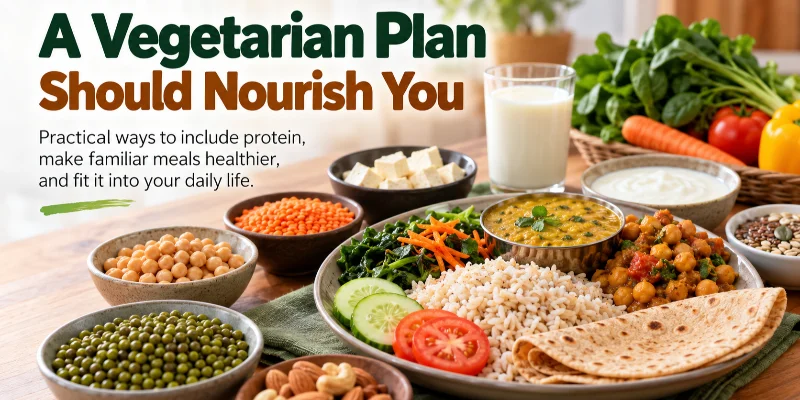

A vegetarian diet can be varied and satisfying, but the label vegetarian does not describe the balance of a meal. A plate of rice, potato curry, and a small spoon of dal may provide little protein compared with what the person needs. At the other extreme, advice to eat unlimited paneer or buy a protein powder can ignore cost, overall nutrition, and kidney health. The useful goal is to include suitable protein foods across the day while accounting for the carbohydrate and energy they also provide. Start with your customary meals and work out where a practical addition or substitution would help.
Dal, chickpeas, beans, and green gram provide protein, but they also contain carbohydrate. They can support a balanced meal without being treated as carbohydrate-free replacements for everything else. Plain curd, milk, paneer, tofu, and other foods may fit depending on whether you use dairy or avoid animal products entirely. Their nutrition differs, so do not assume equal portions are interchangeable. Nuts and seeds can add flavor and nutrients, but a small garnish is not necessarily a complete protein serving. A dietitian can translate your requirements into actual household portions.
Try to distribute protein-containing foods across meals rather than relying on a large serving at dinner. Breakfast might include a pulse preparation or suitable dairy food. Lunch and dinner can use dal, beans, or tofu alongside vegetables and a planned staple portion. These are examples of meal construction, not a prescription of grams for every reader. Your needs depend on factors such as age, body size, activity, pregnancy, and kidney function. If you have kidney disease, do not start a high-protein regimen without advice from the clinician managing it.
Think about the actual recipe. A vegetable sambar with very little dal differs from a thicker pulse preparation, and a small spoonful may contribute less than the dish's name suggests. You can ask a dietitian whether changing the recipe or serving size would improve the meal. Add nonstarchy vegetables for variety, and use a consistent bowl for the staple portion. Avoid replacing all rice with an enormous serving of pulses without discussing total carbohydrate and digestive tolerance. Sudden increases in beans may also feel uncomfortable for some people.
Convenience matters. Cooked pulses can be portioned safely for short-term use, or suitable ready-to-use products can help when time is limited. Check added salt and sauces where relevant. Tofu and dairy products need appropriate storage. Choose foods you like enough to repeat, and compare costs before making a new product part of every day. If a preparation takes too much effort, find an easier version. A plan based on ordinary groceries can be more dependable than one requiring a special powder you cannot consistently afford.
Vegetarian nutrition also involves overall energy and micronutrients. People following a vegan diet need a reliable vitamin B12 strategy, which may include fortified foods or supplementation discussed with a professional. Iron, calcium, and other needs deserve attention according to your circumstances. Supplements should address a reason, not serve as proof that the diet is healthy. Tell your care team what you already take, including products recommended by friends. An appropriate supplement does not replace meals, and a protein powder is not automatically necessary because you have diabetes.
Consider an illustrative office worker who eats bread with tea at breakfast, rice with a thin curry at lunch, and then feels very hungry in the evening. The first step is to review the full day, not accuse the person of poor discipline. A practical change might add a suitable protein-containing food at breakfast and make the lunch pulse serving clearer. The worker can assess satiety and affordability over several days. If persistent fatigue or unintended weight loss is present, a clinical assessment is more useful than simply buying more protein.
Record your meals for two ordinary days without trying to make the record look ideal. Circle the foods that supply protein and note the amounts in familiar measures. Identify one meal with little protein, then choose an affordable addition that fits your dietary preference. Try it for a few days and watch for hunger, digestive comfort, and preparation difficulties. Keep the rest of your routine reasonably stable so the change is easier to evaluate. Ask for individualized advice if kidney disease, poor appetite, pregnancy, or unintended weight change is involved. Bring supplement labels to your next appointment. Review whether the plan supports adequate nutrition rather than simply satisfying a protein trend.
Write your plan in the language you use at home. A useful instruction should explain what to do, when to do it, and whom to contact when something goes wrong. Ask a clinician or educator to explain unfamiliar terms, then describe the instruction back in your own words. This helps uncover misunderstandings before they become problems.
Make room for practical limits. Work hours, caring responsibilities, mobility, money, and access to services all affect what is possible. Bring these details into the conversation rather than agreeing to a routine you cannot sustain. A smaller step that fits everyday life is often easier to repeat than an ambitious plan requiring ideal circumstances.
Ask for clarification whenever instructions seem confusing. Your observations matter during the next clinical conversation. Agree on a realistic follow-up date with your clinician. A familiar notebook can be as useful as a complicated app. Bring your questions to an appointment instead of relying on memory. Check that any written plan still matches your current prescription and circumstances.
No. Dal provides both protein and carbohydrate. It can be valuable in vegetarian meals, but its carbohydrate still matters when planning portions or calculating insulin under an established carbohydrate-counting plan.
Not automatically. Many people can meet their needs with ordinary foods. A clinician or dietitian can assess whether a supplement is useful, particularly when poor appetite or another medical condition limits intake.
No. Paneer also supplies energy and fat, and preparations may include substantial oil or sauces. Choose a suitable serving within the overall meal rather than treating protein content as permission for unlimited portions.
They need individualized guidance. The appropriate protein amount and other dietary considerations can change with kidney function and treatment. Do not adopt a high-protein plan based only on general diabetes advice.
Discuss a balanced vegan plan that includes reliable vitamin B12 and adequate energy, protein, and other nutrients. Bring examples of your normal foods so the advice is practical for your household.
Start by strengthening one vegetarian meal with a suitable, affordable protein food. Account for the whole dish, keep portions understandable, and check special medical needs before making large changes. Good nutrition comes from a workable pattern across the day, with supplements used only when they serve a clear purpose.