
Kerala Foods, Glycemic Index, and Their Relationship with Diabetes
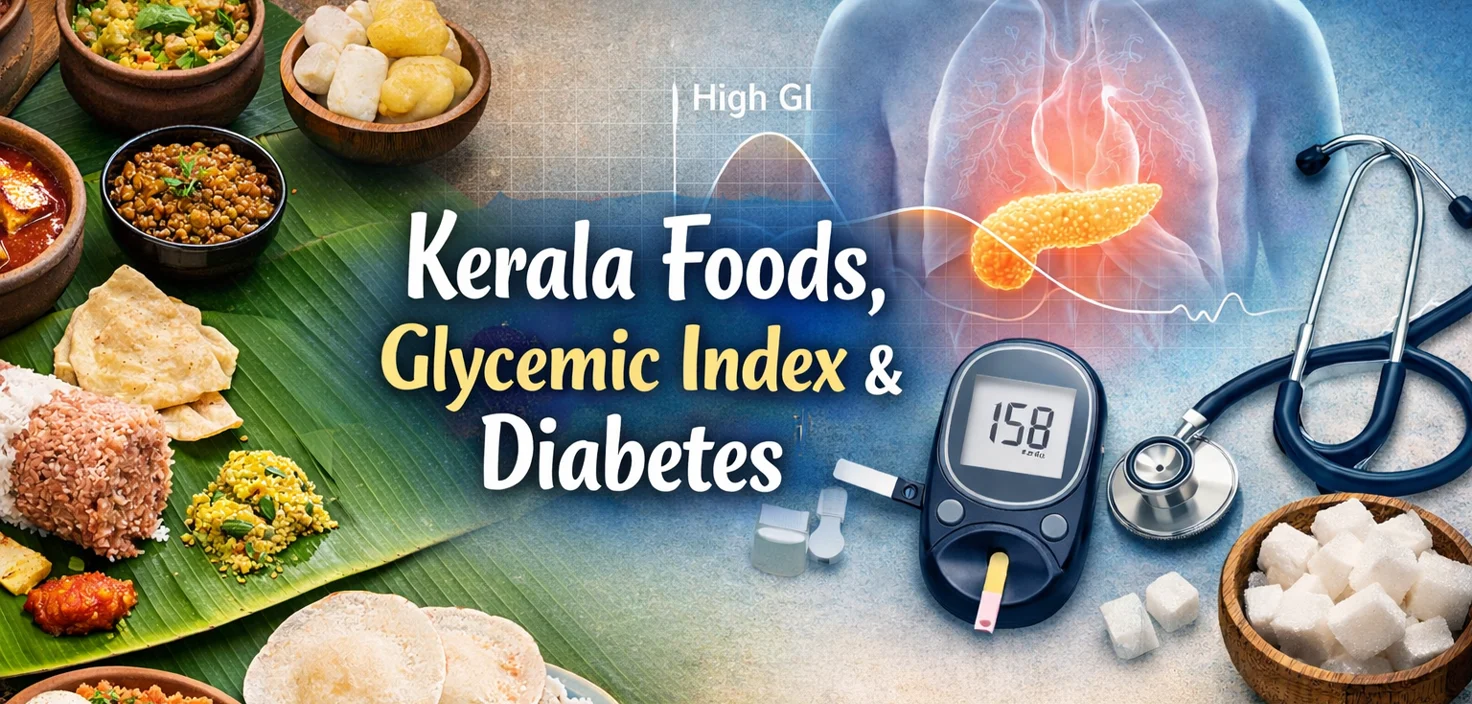

Kerala is widely celebrated for its rich culinary heritage. From soft idiyappam and fluffy appam to hearty puttu, aromatic biriyani, and traditional rice-based meals served on banana leaves, Kerala food reflects culture, climate, and tradition. However, with the rising number of people diagnosed with diabetes in Kerala, an important question arises:
How do traditional Kerala foods affect blood sugar levels?
The answer lies in understanding something called the Glycemic Index (GI) — a concept that plays a crucial role in diabetes management and long-term metabolic health.
Diabetes mellitus is a metabolic disorder in which the body either does not produce enough insulin or cannot effectively use the insulin it produces. Insulin helps glucose enter cells to be used as energy. When this process fails, glucose accumulates in the bloodstream, leading to high blood sugar levels.
Food choices significantly influence blood sugar fluctuations. Not all carbohydrates behave the same way in the body. Some foods cause a rapid spike in glucose, while others release sugar slowly and steadily.
This difference is measured using the Glycemic Index.
The Glycemic Index ranks foods based on how quickly they raise blood sugar levels after eating.
Low GI foods (55 or less): Slow glucose release, stable energy levels
Medium GI foods (56–69): Moderate blood sugar rise
High GI foods (70 and above): Rapid glucose spike
For people with diabetes — and even those trying to prevent it — choosing lower GI foods can help maintain stable blood sugar and reduce insulin stress.
Traditionally, Kerala meals were balanced with fiber-rich vegetables, coconut, pulses, and physically active lifestyles. However, modern habits have changed dramatically:
Increased polished white rice consumption
Reduced physical activity
Higher intake of refined snacks and sugars
Frequent eating outside the home
These changes have increased the glycemic load of daily meals, contributing to rising diabetes cases across the state.
Let’s examine popular Kerala foods and how they impact blood sugar.
Rice is the foundation of Kerala cuisine.
Polished white rice: High GI (70–90)
Causes rapid blood sugar spikes.
Kerala red rice (Matta rice): Medium GI
Contains more fiber and nutrients due to minimal processing.
Switching from polished rice to matta rice or reducing portion size can significantly improve glucose control.
Puttu is made from rice flour and steamed with coconut.
GI: Medium to High (depends on rice flour refinement)
Coconut adds fat and fiber, which slightly slows sugar absorption.
Tip: Pair puttu with kadala curry (black chickpeas) to reduce glucose spikes due to protein and fiber balance.
Soft and fermented, appam is lighter than many rice dishes.
GI: Medium
Fermentation improves digestion and may slightly lower glucose response.
However, portion control remains important.
Made from fermented rice and urad dal batter:
GI: Medium to High
Fermentation helps gut health but rice content still raises glucose quickly.
Eating with sambar or protein-rich side dishes helps stabilize blood sugar.
A beloved Kerala staple.
GI: High
Quickly converts to glucose in the body.
Although natural and traditional, frequent large portions can cause sugar spikes in diabetics.
Kerala bananas are nutritious but carbohydrate-dense.
Ripe bananas: Medium to High GI
Raw banana preparations: Lower GI due to resistant starch.
Moderation is key rather than complete avoidance.
Coconut is widely used in Kerala cuisine.
Good news:
Coconut has low glycemic impact
Healthy fats slow glucose absorption
Helps improve satiety
Traditional coconut use is rarely the problem — excess refined carbohydrates usually are.
When high-GI foods are consumed frequently:
Blood sugar rises rapidly.
The pancreas releases more insulin.
Over time, insulin resistance develops.
Beta cells become stressed and weakened.
This cycle contributes to Type 2 diabetes progression.
Managing diabetes is therefore not just about avoiding sugar — it is about understanding how everyday foods affect glucose response.
Earlier generations in Kerala naturally balanced high-carb diets with:
Farming and physical labor
Walking long distances
Early meal timings
Minimal processed food intake
Today’s sedentary routines amplify the effects of high-GI diets. Even traditional foods can become problematic when lifestyle balance disappears.
You do not need to abandon Kerala cuisine. Small modifications can make a powerful difference.
✔ Reduce rice portion size, increase vegetables
✔ Combine carbohydrates with protein (fish, pulses, eggs)
✔ Add fiber-rich side dishes like thoran and salads
✔ Avoid eating carbohydrates alone
✔ Prefer steamed foods over fried snacks
✔ Maintain consistent meal timing
The goal is balance, not restriction.
Every individual responds differently to food. Two people eating the same meal may experience completely different glucose responses.
This is why diabetes management should move beyond generalized diet charts.
At Glycemia Anti Diabetic Clinic, the focus is not only on controlling blood sugar temporarily but also on addressing underlying metabolic dysfunction. The clinic emphasizes lifestyle correction, dietary understanding, and approaches aimed at supporting pancreatic beta-cell function rather than relying solely on symptomatic sugar control.
By analyzing eating habits, lifestyle patterns, and metabolic responses, patients receive structured guidance tailored to real-life Kerala dietary habits — making long-term improvement more achievable.
A common misconception is that traditional foods cause diabetes. In reality:
Traditional diets were balanced.
Modern lifestyle changes created metabolic stress.
Portion size and food combinations matter more than food identity.
Kerala cuisine can absolutely be part of a diabetes-friendly lifestyle when consumed mindfully.
Understanding glycemic index empowers people to make smarter decisions without giving up cultural food habits.
Yes, but portion control and type of rice matter. Choosing matta rice and combining it with vegetables and protein helps reduce blood sugar spikes.
Puttu can be eaten in moderation when paired with protein-rich sides like kadala curry. Eating it alone may increase glucose levels quickly.
No. Bananas can be consumed in small portions, preferably not on an empty stomach. Less ripe bananas have a lower glycemic impact.
No. Coconut contains healthy fats and fiber that actually slow glucose absorption. It is generally safe when consumed in traditional quantities.
Diet plays a major role, but sustainable improvement usually requires lifestyle correction, metabolic evaluation, and professional guidance such as programs offered at Glycemia Anti Diabetic Clinic.
Kerala’s food culture is deeply nourishing and culturally meaningful. The problem is not traditional cuisine itself but the imbalance created by refined carbohydrates, reduced activity, and modern eating patterns.
Understanding the glycemic index allows individuals to enjoy familiar foods while protecting metabolic health. With informed choices, proper lifestyle adjustments, and expert guidance, managing — and potentially improving — diabetes becomes a realistic goal.
Rather than fearing food, the key is learning how food works with your body. When knowledge meets tradition, healthier living naturally follows.