
Can Type 2 Diabetes Be Reversed? What Most Doctors Don’t Tell You
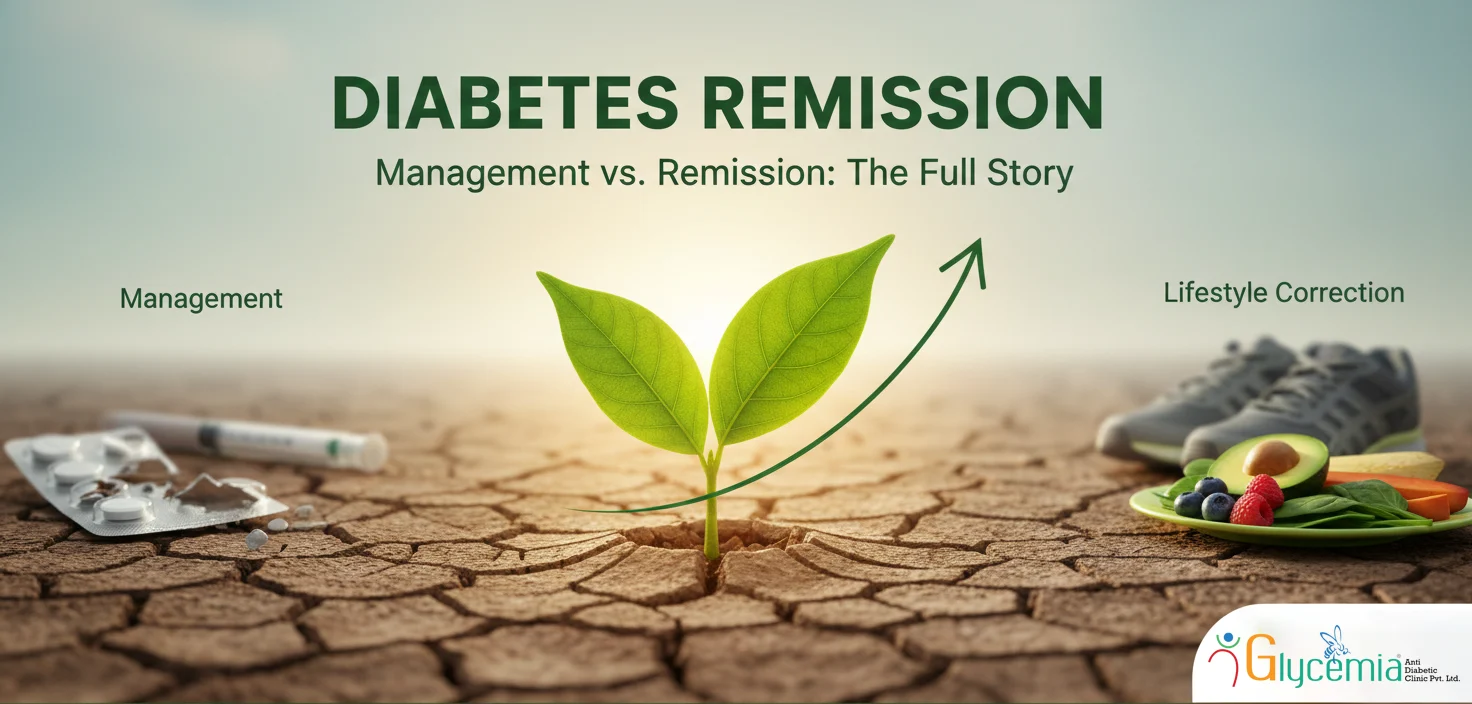

But is that the full story?
Today, growing research and clinical experience suggest something important — Type 2 diabetes is not always a one-way road. In many cases, it can go into remission. However, there’s a big difference between managing diabetes and actually reversing its progression. Understanding that difference can change everything.
Let’s break it down clearly.
This is what most patients experience.
But here’s the key point:
The underlying problem — insulin resistance and pancreatic beta cell stress — may still continue silently.
In many patients, medication doses gradually increase over the years. Some move from tablets to insulin. This is not failure — it simply means the root issue wasn’t fully addressed.
Remission means:
Remission does not mean “cure.”
It means the body has regained enough metabolic balance to function without continuous drug support.
And this is where most people are not fully informed.
This is not about blame. Most doctors work under time pressure and focus on immediate safety — which is important. High blood sugar must be controlled.
However, patients are rarely told that:
If detected early and corrected properly, the metabolic burden on the pancreas can be reduced.
That opens the door to remission.
Type 2 diabetes is not primarily a “sugar disease.”
It is a metabolic disorder driven by insulin resistance.
When we consume excess refined carbohydrates, live sedentary lifestyles, sleep poorly, and experience chronic stress:
Medication lowers blood sugar — but if insulin resistance remains uncorrected, the disease continues progressing underneath.
This is why some patients develop complications even when sugars seem “controlled.”
Here’s the carefully explained truth.
Beta cells are not completely helpless. In early and moderate stages of Type 2 diabetes:
…can allow beta cells to function more effectively again.
However, if diabetes has been uncontrolled for many years, permanent damage may have occurred.
So the earlier intervention begins, the better the chances.
This is why timing matters.
Research shows that remission becomes more achievable when:
This is not a “quick fix” or crash diet approach.
It requires structured, medically supervised metabolic correction.
Medicines are life-saving when required. They prevent complications. They reduce immediate risks.
But medicines:
Without lifestyle correction, treatment becomes lifelong dependency rather than metabolic improvement.
That’s the difference between managing and transforming.
At Glycemia Anti Diabetic Clinic, the focus goes beyond simply lowering sugar readings.
The approach emphasizes:
The goal is not unrealistic promises.
The goal is structured improvement.
Every patient is different. Not everyone can achieve full remission. But many can reduce medication dependency, improve metabolic health, and prevent progression when the right corrective steps are taken.
You may have a higher possibility of remission if:
Even if you have had diabetes longer, metabolic improvement is still possible — and that alone reduces long-term risk dramatically.
Type 2 diabetes reversal is:
✔ Possible for many
✔ Scientifically supported in early stages
✔ Dependent on disciplined lifestyle correction
✔ Stronger when medically supervised
It is NOT:
✘ An overnight cure
✘ A magic herbal solution
✘ A reason to stop medicines suddenly
✘ A guarantee for every patient
Responsible care matters.
Instead of asking:
“Which tablet should I take?”
Ask:
“What is happening inside my pancreas and metabolism — and can that be improved?”
That shift in thinking changes the entire treatment journey.
If you or your loved one has Type 2 diabetes and wants to explore whether remission or medication reduction is possible, a structured evaluation is essential.
At Glycemia Anti Diabetic Clinic, Kannur, we assess:
And guide patients through a supervised correction plan when appropriate.
Early action makes a difference.
? Book a consultation and understand your stage of diabetes before assuming it is permanent.
Because sometimes, what you’ve been told isn’t the complete story — and your body may still have the capacity to improve.